
A Brightness Long Ago
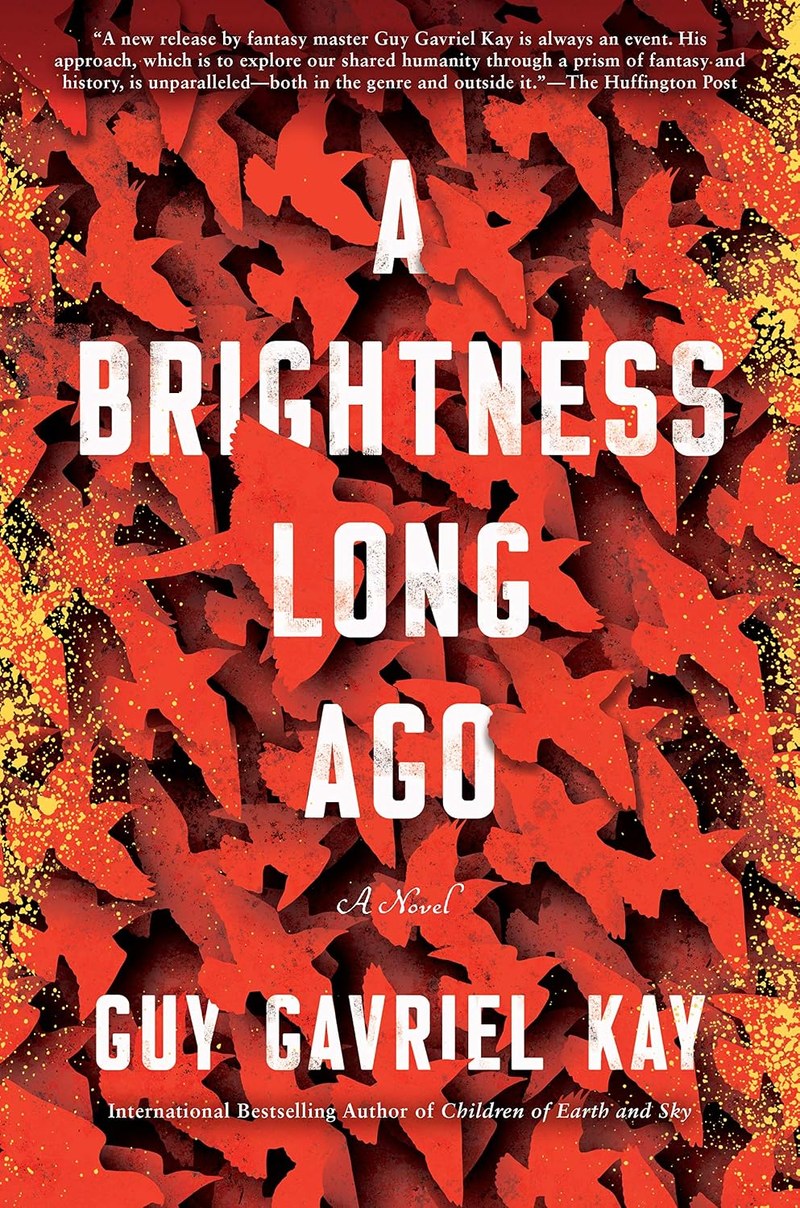
A Brightness Long Ago is a lush meditation on fate, character, and fortune, structured around the reminiscences of Guidanio Cerra, an aging councillor, on his youth and rise to high station on the contingency of being present for truly great events.
The young Danio is working at the court of the Count Uberto, whose moniker The Beast is well deserved. One of Danio’s less pleasant duties is accompanying the palace’s steward when young girls or boys are brought to sate The Beast’s appetites. He recognizes the woman being brought up as Adria Ripoli, not an ordinary peasant girl. Adria is the daughter of a powerful nobleman and associate of the renowned mercenary commander Folco d’Acorsi, who came to Danio’s school. Adria kills The Beast with poison, but is wounded in the process. Danio helps her escape, an impulse to reward courage rather than his unworthy nominal overlord.
The story loops through the intertwined lives of Danio, Adria, Folco, the healer Jelena who nurses Adria back to health, and Folco’s great nemesis Teobaldo Monticola di Remigio. The assassination is one move in the great game between Folco and Teobaldo, but one played to little advantage as both principals are stalemated.
The second act finds Danio falling in with Teobaldo on the road to another city for the annual great horse race, which is a spectacle of gambling and excitement. Adria has entered as a rider, primarily to prove her worth as more than a potential bride, partially because Folco sees an opportunity. Danio tells Teobaldo, who embarks on his own scheme to steal Folco’s thunder. Danio and Adria meet for a second time, and a once-in-a-lifetime romantic encounter, and then her jealous father does something truly stupid and everyone has to desperately improvise a way to avoid a general war.
The third act could be considered consequences, as everyone heads home and onwards with their lives. Danio becomes a diplomat for his city of Seressa, Folco and Teobaldo face off on opposite sides of one of the great power struggles, and Sarantium finally falls.
Kay is a gorgeous writer, with a gift for sensuality and sentiment and psychology. There isn’t so much of a plot as a continual mood, which is fine, since events move at a good pace. Yet I can only mark off a point because the setting is literally Renaissance Italy. Not inspired by, not based on, literally. The characters have some more modern opinions towards feminism and homosexuality, though the majority of people are plenty conservative, and there’s no mention of a New World, but everything else just has the names changed. I can get the urge to write historical fiction without having to deal with inconvenient “well actually”s about historical events, but by Jad does it feel lazy.