
Breath: The New Science of a Lost Art
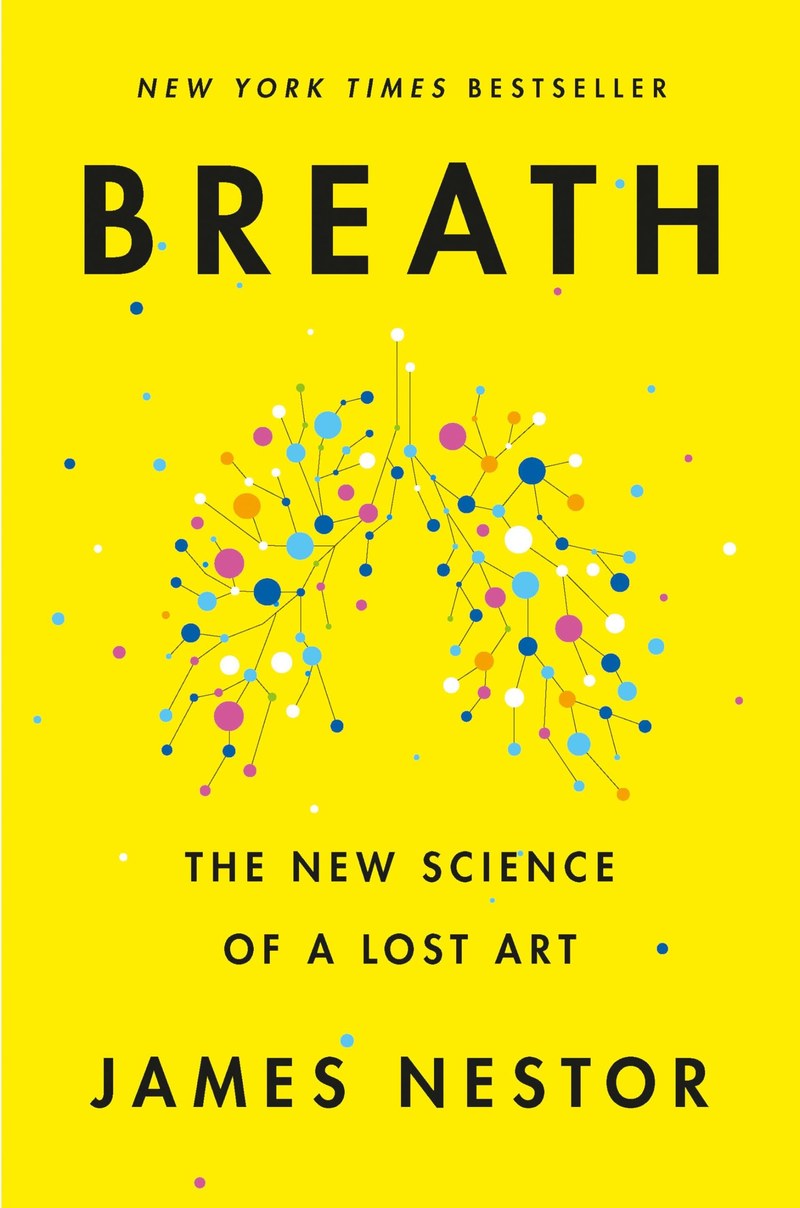
Breath is a fascinating work of alternative medicine. Like a lot of people, Nestor was plagued by chronic respiratory problems, which were alleviated by a transformative experience at a breathwork class near his house in Haight-Ashbury. This led Nestor down a decade-long journey into the world of what he calls pulmonauts; seekers, yogis, coaches, who have plumbed the mysteries of breath.
From a standpoint of raw physiology, modern breathing problems are just that, modern and artificial. Anthropological collections of pre-industrial skulls, as well as ethnological reports from around the world, show that people once had much better developed sinuses and jaws, and were generally in better health. Nestor tracks this devolution to a diet of processed food, a change that occurred roughly 300 years ago. However, it can be reversed with jaw strengthening orthodontics (not tooth removal and braces), as well as a practice of nasal breathing.
There is a consensus that nasal breathing at around 5.5 complete continuous breaths per minute is important for health. This is the basic rhythm of yogi, qi gong, Christian prayers, and Plains Indians culture. “Mouth breather” is more than an insult. An experiment where Nestor and fellow pulmonaut Anders Olsson of the Conscious Breathing Institute blocked their nostrils for 10 days basically wrecked his health. A following 10 day experiment on nasal breathing saw a more-than-complete recovery.
A host of Western scientific renegades have studied breath through the 20th century, prompting miraculous recoveries in sanitorium patients. Lung capacity is the best correlate of life expectancy, though correlation doesn’t imply causation. One interesting scientific thread follows the role of CO2 in healthy respiration. Anders Olsson is a strong proponent that most people breathe too much, and that higher levels of blood CO2 confer health benefits. CO2 is linked to a very fundamental fear trigger divorced from other neural mechanisms, and CO2 therapy might have use in treating anxiety by resetting the breath.
After that is extreme breathing. Tumo is the Tibetan practice of using breath to increase the body’s energy output, with monks literally melting circles in the snow around them. Wim Hof is a similar Western technique, and there are also athletic practices which have led to record setting outcomes. These extreme techniques basically involve small amounts of deliberate damage to build bodily strength, a reversal of the best practices of slow nasal breathing.
This book is inspiring, but has some oddities in its presentation. The conventional medical attitude towards breathwork comes off as conspiratorial. Nestor writes about miraculous changes, with a publisher’s note that this is not medical advice and you should consult a doctor. The main causal mechanism around diseases of modernity, processed foods, has some causal problems as well. I’ll buy that softer and more chewable food has led to a host of problems, but I have some questions about the timing. Notably, 300 years ago doesn’t seem to correspond to any material shift. The modern grist mill was invented 200 years ago. Canning, refrigeration, and the TV dinner are more recent. Again, I’m not an expert on this, but 300 years ago most people were eating about the same stuff that they’d been eating since the dawn of agriculture, i.e. mostly gruel with a little bread and dairy.
I’ve become a lot more serious about making sure my mouth is closed. And if you’re interested, www.mrjamesnestor.com has a host of video tutorials as well as sources.