
Crossings: How Road Ecology Is Shaping the Future of Our Planet
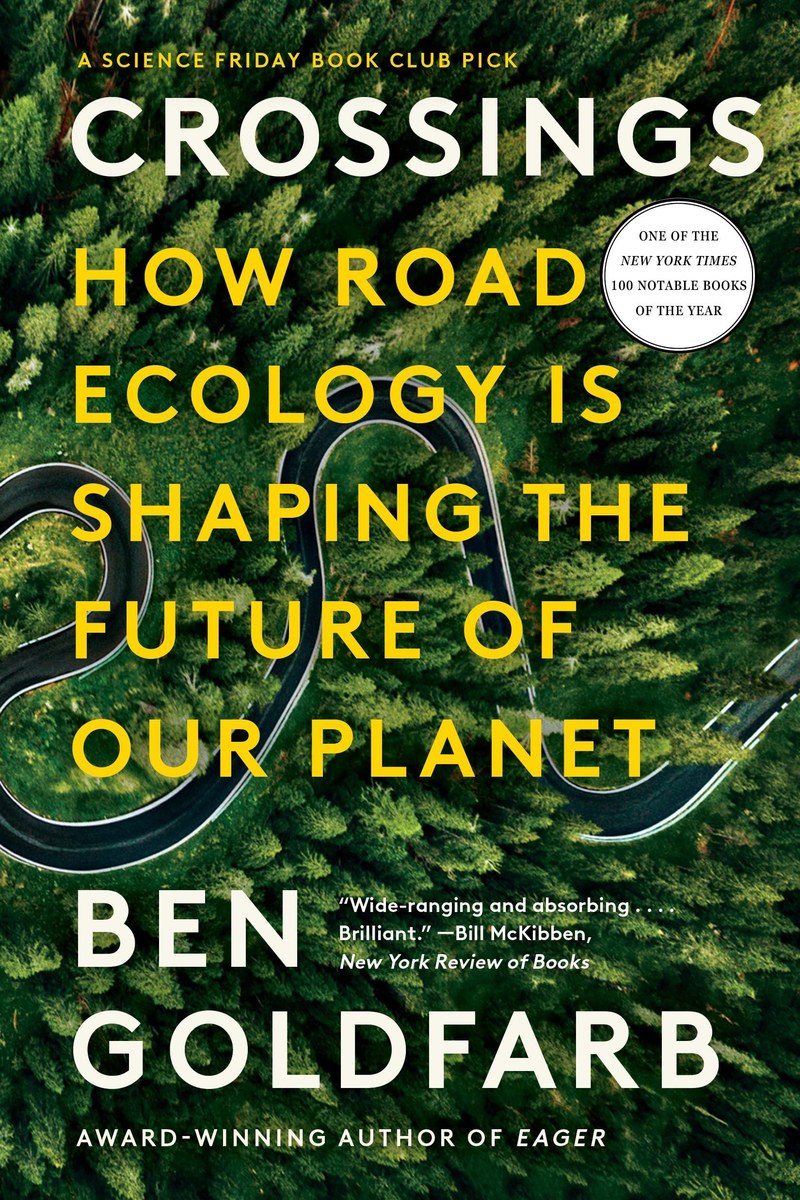
Crossings is a popular review of the field of road ecology, which studies the impact of roads on nature and how those impacts can be mitigated. Goldfarb combines solid science reporting with a bit of purple-prose, which makes the book both informative and manipulative.
The big picture is that roads kill billions of animals every year, from moose down to monarch butterflies. Roads are vital to every human activity, and equally harmful to animals. In the United States, white-tailed deer are the iconic roadkill species. A collision with a white-tail costs $9000 in terms of car repairs and medical costs. Many animals are hit, and as traffic volume increases past one-car-per-minute, migrations across a road become impossible for many animals. Highways slice ecosystems into isolated islands that cannot sustain their populations, and for slow-breeding animals like turtles, even a few crashes can lead to a death spiral.
The most basic hack is animal crossings. Given an alternative, an animal won’t wander into traffic. This varies for each species, but basically involves fences to protect the main road, as well as tunnels or bridges wide enough and frequent enough that animals will use them. Some early passageways were dank and claustrophobic tunnels: most macrofauna like big open spaces. Small animals like frogs and reptiles can use smaller culverts, but need them every few hundred yards, rather than every mile. Siting and designing animal passages is both art and science.
The bad news is that it’s expensive, and transportation engineers are loath to impact budgets. The 2021 infrastructure bill had the largest ever animal crossing funding source at $340 million, an insignificant fraction of the $1.5 trillion bill itself.
There have been success stories, but roads themselves are hazardous. Even almost unused tracks in national forests can block cautious animals from crossing. The sound from the road in Glacier National Park, used only by official tour buses on a strictly limited basis, carries for miles with acoustic impacts on birds. Given the omnipresent stretch of roads, it’s hard to find a place that hasn’t been impacted, and even harder to do science there, since scientists prefer to drive to, or at least near, field sites.
Goldfarb is firmly on the side of nature against cars, but we’re also walking creatures. This book presents a fascinating rethinking of the tragic pile of fur on the highway shoulder.