
Everything Must Go: The Stories We Tell About the End of the World
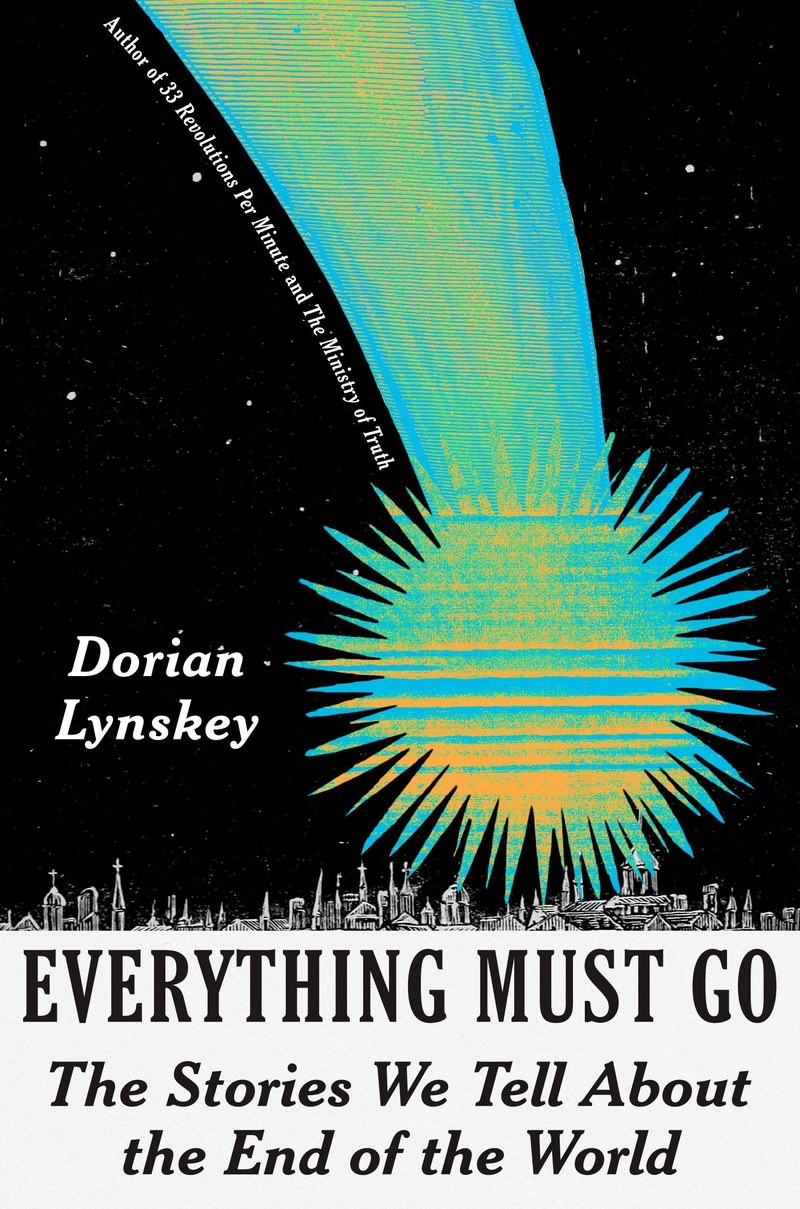
Everything Must Go is a literary survey of how the world ends, from the Revelation of John of Patmos, through Mary Shelley, and then the technological apocalypses of nuclear war, rogue artificial intelligence, super-empowered plagues, and climate change. It’s a solid book, with some odd lapses.
There is a longstanding fascination with the end of everything. We know through long experience that all things have a beginning and an ending. It would be both a privilege and a terror to be there at the end, to witness that final burning crash, or to wander through decaying ruins. Death makes all our anxieties and insecurities come to the forefront. Lynskey ably skips through his subject, covering a wide range of stories, and how predictions of the world’s end have not yet happened.
The sour notes are a pandemic chapter that somehow entirely elides COVID-19, which is an oversight that I can only think lampshades how hard it is to write art about a pandemic. Fiction about the Black Death and the 1918 Spanish Flu is minuscule in proportion to their human impacts. The last chapter, on climate change, has trouble fairly discussing an actual slow motion planetary extinction event, though one that has humans far down on the list of species affected. And similarly, the section on climate fiction is lacking in comparison to the in depth studies of end-of-the-world stories from the 1970s.
Surprisingly light for a hefty subject, Everything Must Go says mostly don’t worry.