
The Achilles Trap: Saddam Hussein, the C.I.A., and the Origins of America's Invasion of Iraq
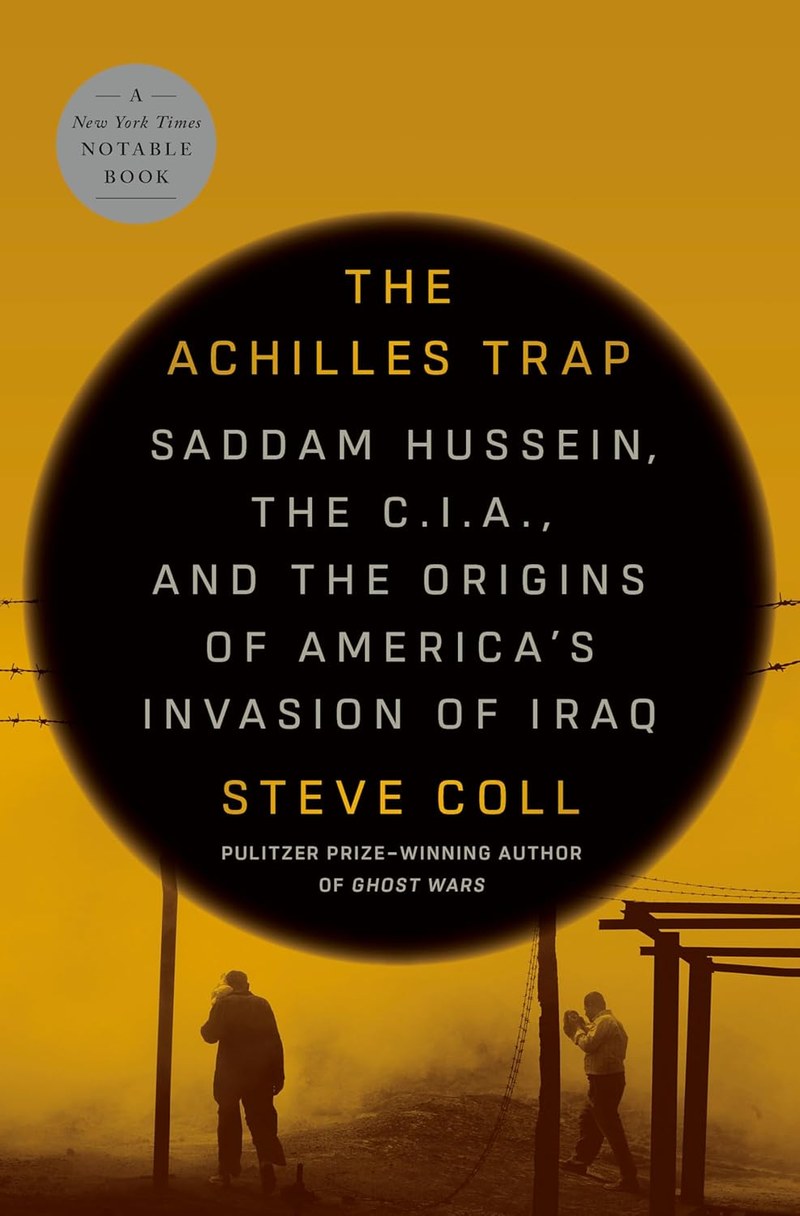
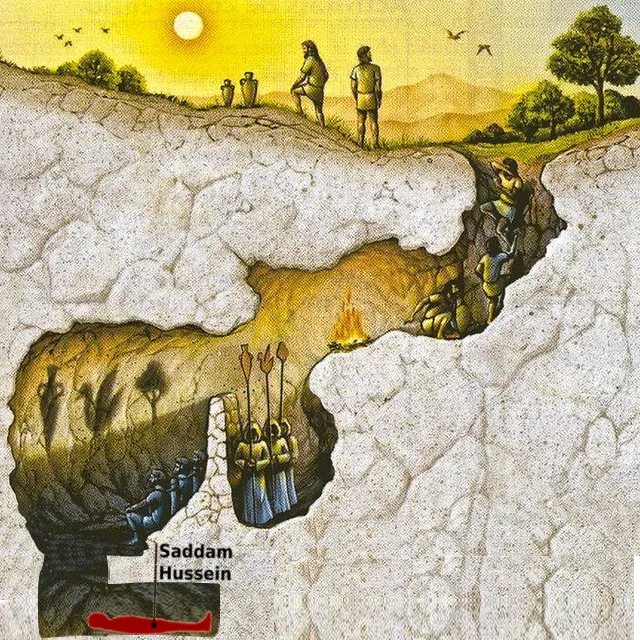
At this point in The End of The End of History, Saddam Hussein has ceased to be a political figure and become a meme. Here’s Saddam shaking hands with Donald Rumsfeld. Here’s a disheveled Saddam being pulled from his spider hole. Here’s Saddam casting a shadow over the future.
Coll’s book examines Saddam through the lens of the force that eventually brought him down, his weapons of mass destruction (WMD) program. He draws from extensive interviews and new documents, including recordings of top-level meetings between Saddam and his government. Saddam rose through the ranks of the Baathist political revolution through ambition and violence, becoming president of Iraq in 1979. The following year, Saddam ordered the invasion of Iran, hoping to take advantage of the disorganized revolutionary government to carve off some provinces and blunt Shia Islamism. This strategic miscalculation sucked Iraq into a grinding war against a larger neighbor.
In the early 1980s, Saddam was losing the war. Iraqi armor and chemical weapons were no match for Iran’s larger size and fanatical militias. Desperate to contain Iran as well, the CIA reached out to Saddam, providing satellite photos. The CIA helped stabilize the war, but failed to build a lasting relationship with Saddam. A natural paranoiac, his belief that the CIA was all powerful and part of a Zionist plot to destroy him was only confirmed by Iran-Contra. America’s tacit approval for the use of chemical weapons against Iran and Iraq’s Kurdish population convinced him that complaints about atrocities were just that.
If the Iran-Iraq war was a quagmire, Saddam’s 1990 invasion of Kuwait was a fiasco. Seeking relief from debts incurred from the last war, Saddam instead found himself the target of a global coalition which smashed his army and instituted a sanctions regime that shrank Iraq’s GDP by a factor of 10, killing hundreds of thousands of innocent civilians through
A hasty and secret WMD disarmament program in 1991 proved a lasting curse, as Iraq no longer had the records to show it had abandoned chemical weapons. Deceptive practices, such as trucking 70-ton calutron isotope separators around Iraq in absurd low-speed pursuits, the reflexive defensiveness of Saddam’s personal bodyguards, whose concealment of the man against his enemies was interpreted as concealment of chemical weapons, didn’t help.
Post 9/11, a decision to invade Iraq made in advance by George W Bush, Tony Blair, and a host of neo-conservatives provided a confirmation bias that Iraq must be hiding something, and that Saddam had to be removed. Mutual distrust prevented any kind of peaceful outcome, leading to the 2003 invasion of Iraq and much of the world’s present geopolitical pain. Regime change is very very hard.