
A Burglar's Guide to the City
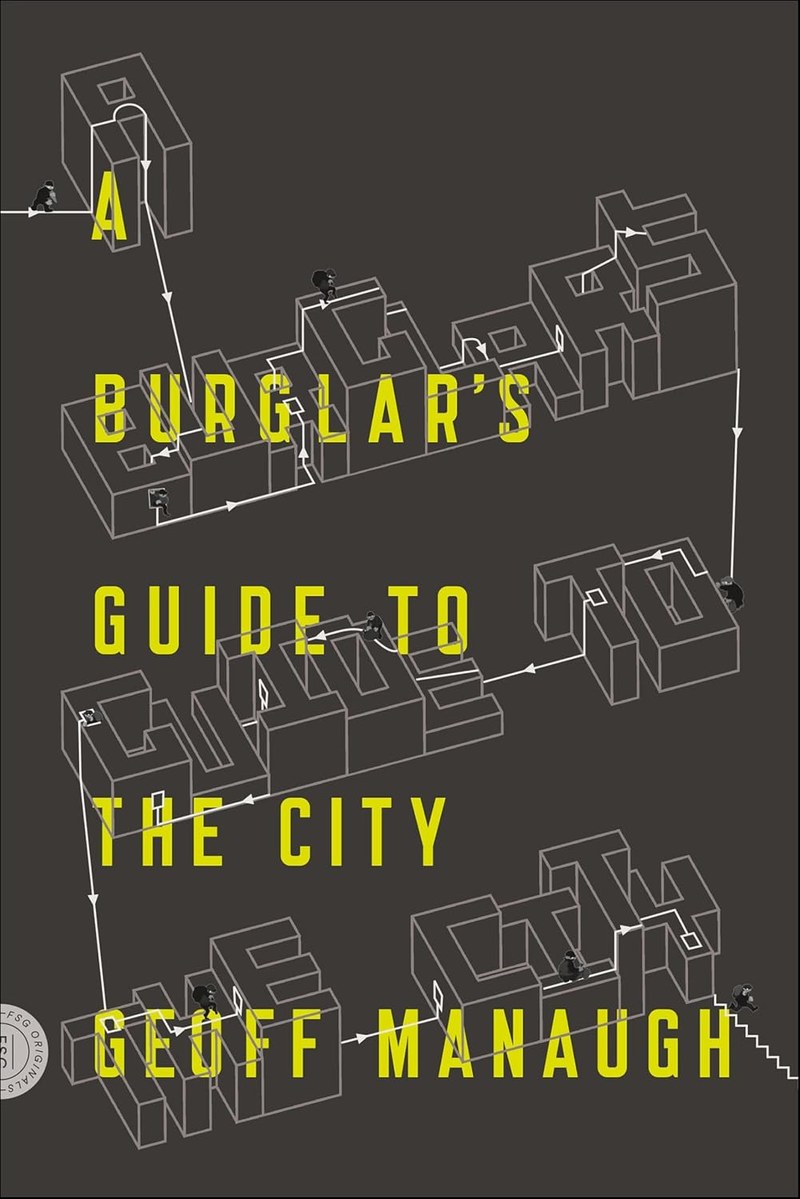
A Burglar’s Guide to the City is like a sharply defined modernist monolith whose elegant exterior conceals beige conference rooms with Styrofoam drop ceilings. The book begins incredibly, telling the story of one of New York’s most infamous burglars, George Leonidas Leslie. Leslie was trained as an architect, and used his proper bearing to gain access to blueprints of banks and mansions, which he’d then replicate in criminal warehouses, drilling a crew of thieves again and again until they could carry out their mission in the dark. Leslie was the original Ocean’s Eleven-style mastermind, as documented in the biography King of Heists by J. North Conway.
Having hooked the reader, Manaugh offers a potent theoretical framework. Burglary is by definition a crime of architecture: it can only be done while trespassing in a building. The same object stolen under the open sky is merely sparkling larceny. Burglars as a class see architecture in a different way from the rest of us. A locked door is simply bypassed by cutting through a wall or dropping from a ceiling. Windows provide the ability to look in and scope valuables. To the burglar, architecture unfolds like dimensions in The Matrix.
It is a fantastic idea, and that’s about as far as it goes. Grand heists and precision attacks are very rare. Most burglaries are hasty smash-and-grabs carried out by addicts and teenagers. Criminals are notoriously non-communicative, so Manaugh spends a lot of time hanging out with cops, gussying up the LAPD helicopter division and a guy who sells panic rooms. There are a few gems in the muck: a Toronto thief who calculated expected take based on external fire escapes, because the building code ties exits to occupancy, so fewer stairs means fewer people means bigger apartments means wealthier victims. Robberies are only as good as their escapes, and one bank robber evaded pursuit by hiding in plain sight, parked across the street while cops dashed off in all directions. Mostly, the book restates the premise and lets helicopter cops talk about aerial perimeters.
The fantasy of burglary is just that, a fantasy. As Manaugh discusses, breaking into a home is a profound violation just short of rape, and one that can send victims spiraling over who could have cased their house, who could have broken in. The reality of burglary is a grimy and crude invasion that wrecks far more than the worth of whatever was stolen. There is no visionary transformation of space.
I will say the book has quite a bibliography, including Conway’s King of Heists, Bill Mason’s Confessions of a Master Jewel Thief, Pederson’s The King of Diamonds, and Kieckhefer’s Magic in the Middle Ages, but I’d go to the primary sources for crime, and the architectural criticism never resolves.