
A Trade of Blood
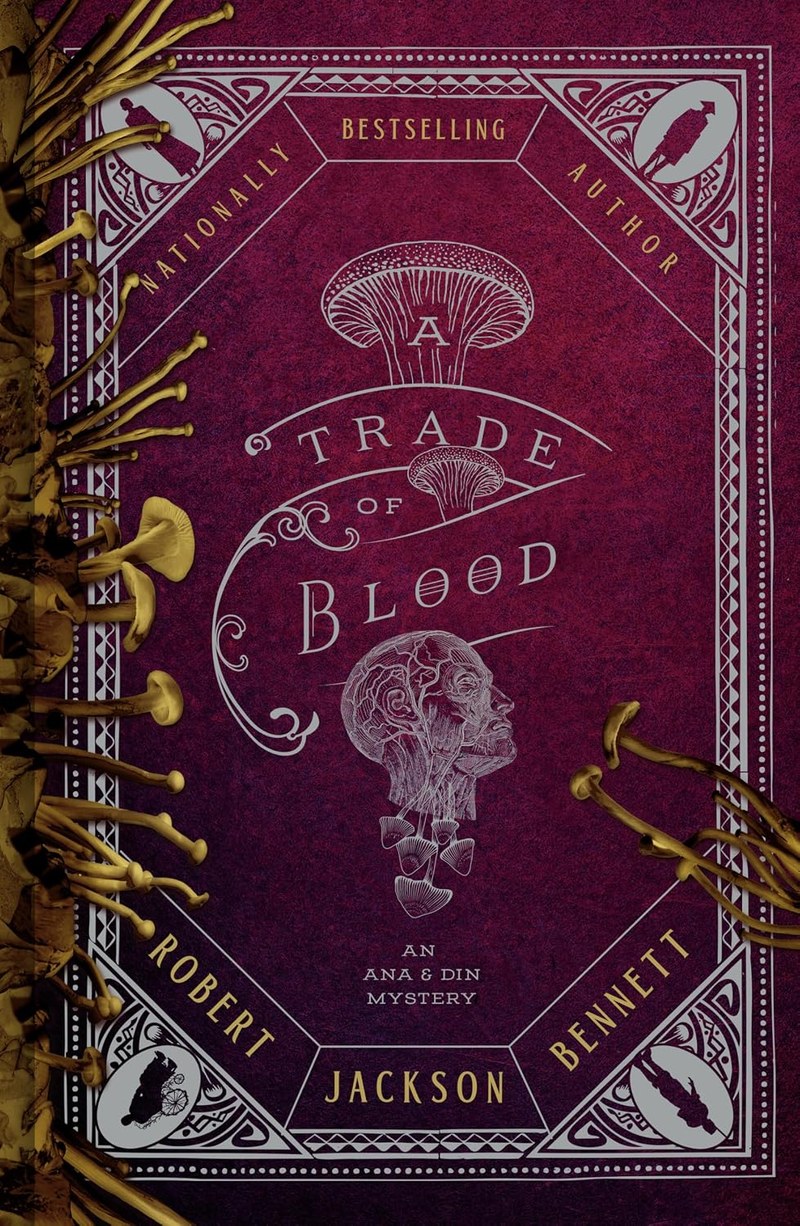
Two families, alike in dignity and locked in a deadly feud. In this case, they’re ranching families from the same region of the Empire that Din calls home. The daughter of one family has been stabbed to death, and the heir of the other is the obvious suspect, given that he fled from the inn room they rented together covered in blood and holding a knife. Ana begins by lampshading the tropes — pretty dead girls, aristocratic families — but the mystery soon gets weirder and weirder.
The crime scene is notably wrong, even for a bloody murder. The victim didn’t appear to resist in the slightest. The suspect was very much in love with the victim and can provide no motive for the crime or even a clear recollection of how it went down. The suspect is the family’s heir because his three older siblings all died recently, two by suicide and one by accident, and with scanty enough explanation people are turning to divine curses.
Ana and Din soon discover that the actual murder weapon is a variant of Ophiocordyceps unilateralis (the zombie-ant fungus), which was domesticated a few decades ago and used to turn a local cat-monkey creature into a compliant labor force. The fungus has somehow made the leap to humans, and an unknown number of locals have been infected. Anyone could be a sleeper agent for the murderer. This is not just hormonal teens and old grudges: this is a proper mystery, and one which could easily claim the lives of our protagonists.
There is a formula to the Shadow of the Leviathan books, and A Trade of Blood suffers from it. The central bio-alchemic contrivance is fascinating, but there’s less world-building than the previous books. Characterization is there but softer, as Din matures and Ana becomes more reasonable, or at least more familiar to us. These minor complaints aside, I read this book in a single evening, and that’s undeniable evidence of a good time.