
Aurora
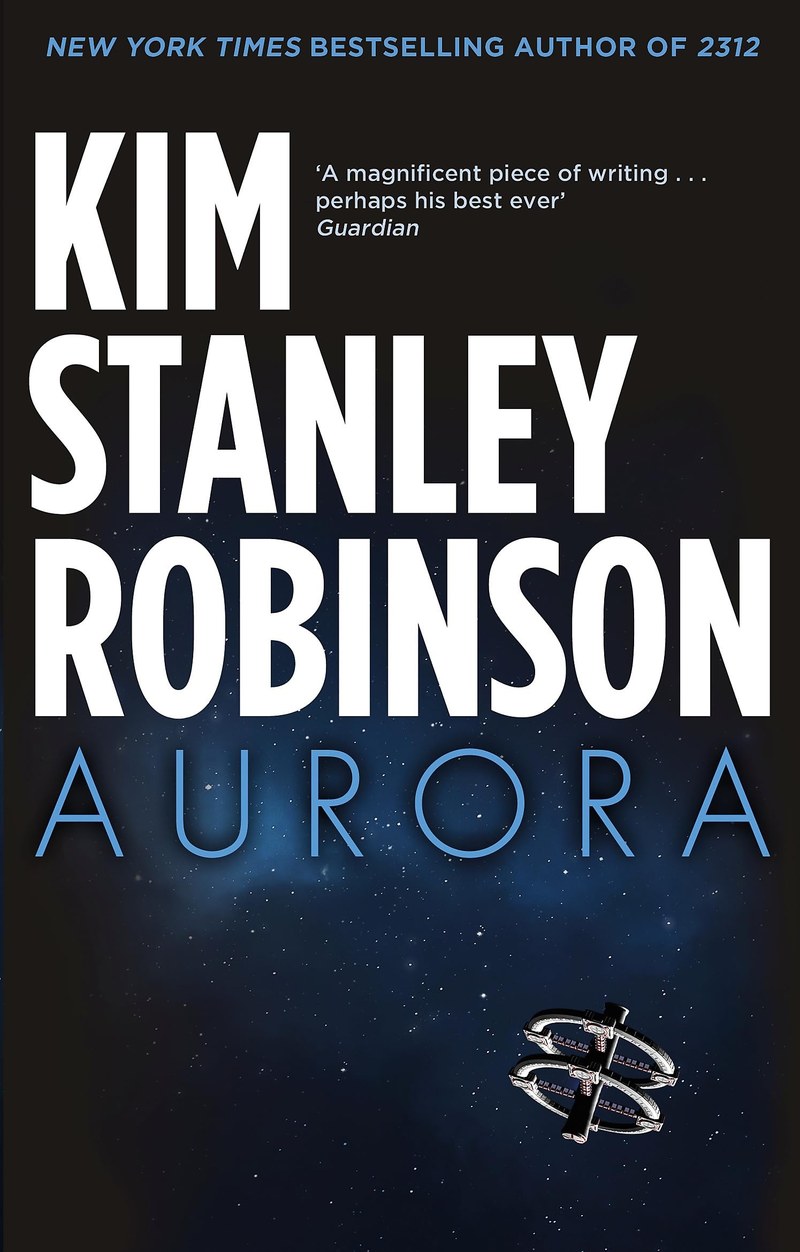
KSR made his reputation with the Mars trilogy, a hard scifi promethean exploration of the possibility of terraforming Mars. A lot of contemporary serious space exploration owes a deep debt to KSR. And in Aurora, he is repaying that debt with a simple message: Space will kill you DEAD, little ape!
The story takes place on a generation ship nearing the end of its voyage to Tau Ceti, roughly 12 light years from Earth. The ship’s environmental balance is slowly collapsing, from metabolic rifts, loss of elements to corrosion, and the ways in which the microbiome is out-evolving the 2000 odd humans that sail on the ship. Chief engineer Devi is a Moses-figure, holding the ship together for its last decade of approach, even as cancer ravages her body. For unknown reasons, every higher animal on the ship is declining, including humans: children are suffering developmental delays, everyone is smaller, everyone is dying sooner. Only the destination provides salvation.
But Tau Ceti is a poisoned chalice. The best candidate for colonization, named Aurora, is a windy water-world with some aluminosilicates and little else. The first settlement begins to fall to an unknown planetary disease, something like a prion that triggers a fatal allergic reaction. The ship splits into factions, roughly half wanting to continue the mission, the other half wanting to return to Earth. There’s a brief and bloody civil war, and the ship physically splits.
The journey back is even more harrowing, a famine that the crew only survives thanks to experimental suspended animation technology. They come into Sol hot, at over 3% light speed, and have to desperately carom through the sun and gas giants to bleed off speed. Finally, battered survivors arrive on Earth in 2900 or so, lost children from the stars.
The story focuses on Freya, daughter of Devi. Freya becomes as close as the ship has to a captain, thanks to a youth wanderjahr through the 20 biome sections of the ship and an attempt to meet everyone. The narrator is the ship itself, a quantum computer that develops superintelligence. Neither is particularly emotionally sophisticated, but the sociology of the generation ship is fascinating, especially in what it conceals from itself. There’s the usual KSR rhapsody about space, rocks, surfing, but the tension of the plot makes this my favorite book of his since the Mars trilogy.