
Bad Company: Private Equity and the Death of the American Dream
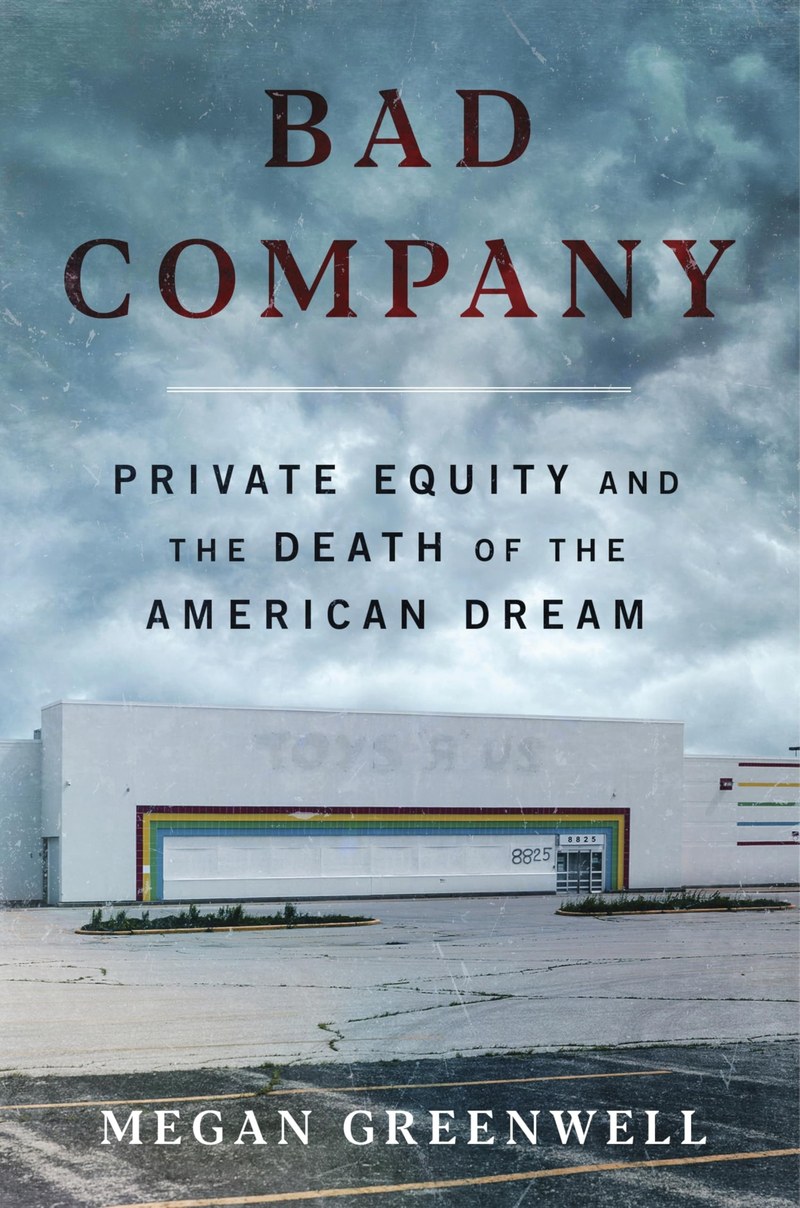
Greenwell is a journalist, who once worked at beloved sports website Deadspin, until it was purchased by private equity and stripped for parts, going from a website with 30 million monthly visitors to one that gets less traffic than a mid-grade Kentucky dog breeder. As a journalist, she was curious about exactly what happened to her.
This book is the story of private equity, mixed with the stories of four other people affected by it. The basic argument of private equity is that as financial geniuses, they can find underperforming businesses and turn them into profitable enterprises. Through various bits of financial arcana, they can take control of a company with loans taken out in its own name, with the firm putting up mere millions of the billions of dollars involved. The rest comes from silent partners, often public pensions, and the lion’s share comes from the company itself, as it’s forced to take out loans to surrender to barbarians. Sometimes, these companies succeed. More often, with new hefty financial obligations of debt repayment and distant corporate control that doesn’t care about business fundamentals, the acquired companies flounder entirely.
The private equity folks make out great, win or lose. They’re paid off of management fees, and 20% of profits. Banks have secured debt, and are first in line to be repaid. Investors often get returns, though it is unclear if the returns are any better than the S&P 500; private equity is notoriously bad about reporting its financials, let alone doing so transparently. Workers and people in the community get screwed.
Liz Marin worked at Toys R Us, a beloved retailer that failed to shift with the 21st century, and then after being acquired was too broke to shift. Roger Gose spent years as a doctor in the small town of Riverton, Wyoming, where his hospital was acquired and shuttered, leaving the town with no medical options. Natalia Contreras worked as a journalist at a variety of papers owned by the Gannett corporation, in the execution of local news. Loren DePina lived in a massive apartment complex owned by CIM, which flooded her and 16 neighbors through gross negligence.
Each of these people rose above what happened to them, through energy, optimism, organization, and luck. This selection is biased, but it’s possibly what we need against a hidden network of degenerate gambling addicts, who have rigged politics in their favor while ripping the metaphorical copper wiring out of our society. I wish this book were a little more analytical, but brief human interest might be what this story needs to develop political momentum.