
Being Jewish After the Destruction of Gaza: A Reckoning
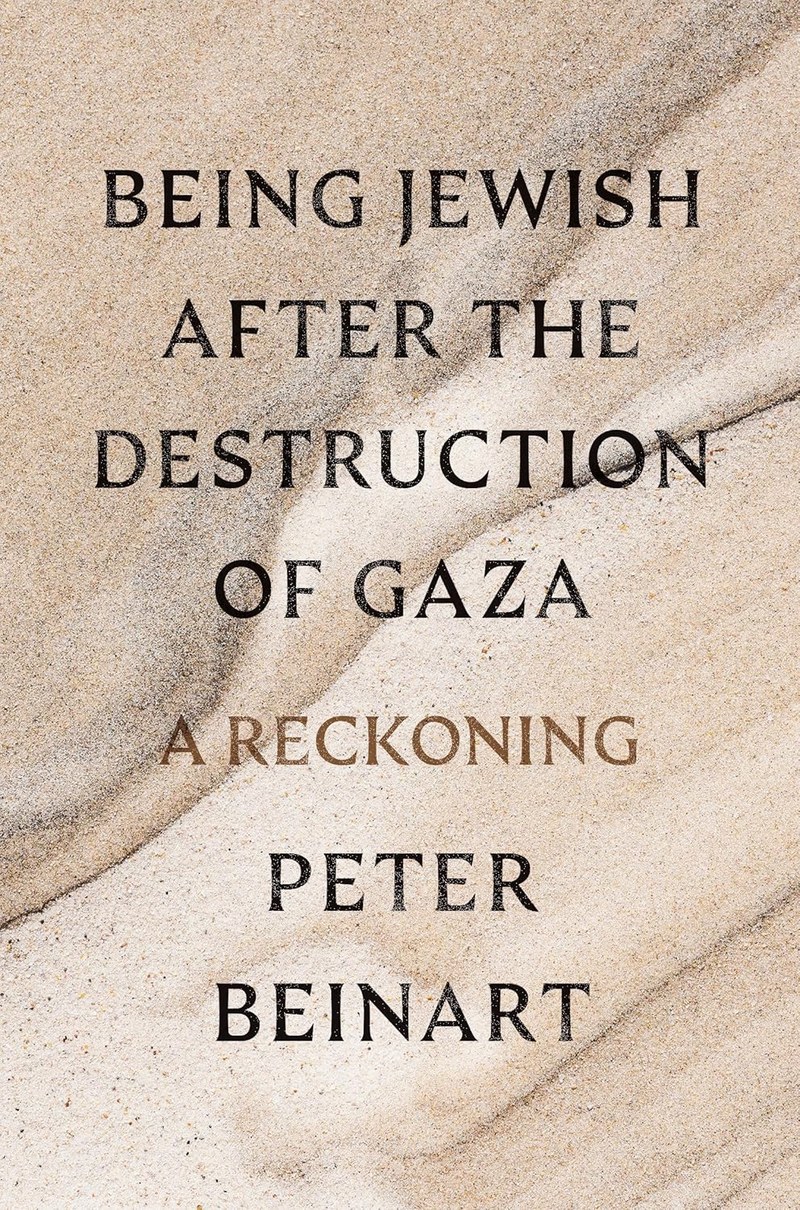
Being Jewish After the Destruction of Gaza: A Reckoning is not an easy book, but it is an important one. The existence of Israel as a Jewish state is inextricably linked to the shadow of a Palestinian people without those rights. At first, this contradiction was smoothed over by the precarious existence of Israel itself, the halting negotiations of the peace process, and the abominable behavior of Palestinian terrorists.
The October 7 attacks, and subsequent escalation of Israeli reaction from ‘mowing the grass’ to ‘scorched earth’ cracked whatever balance remained. Beinart is an editor with Jewish Currents (I’m a subscriber) and tries to unpack where Progressive Judaism is going.
Beinart’s approach examines the mythos of Israel and its consequences; mythos in the sense of the psychology and beliefs, rather than literal untruths. The basic element of this mythos is that Jews are the perennial victims of history. And yeah, Jews have been kicked around a lot, from the destruction of the Temples to the Holocaust. But the story of Purim finishes with Mordecai and his bros murdering Haman and his sons in their sleep. And the whole point of Israel is not to be victims any more.
A second line of mythos is that criticism of Israel is criticism of Jews, or in other words that anti-Zionism is also antisemitism. The “New antisemitism” is not so new; it’s traceable to at least the 1960s, when the Black-Jewish alliance of the civil rights movement broke apart on the pretty successful assimilation of American Jews, and the identification of radical factions like the Black Panthers with international anti-colonial struggles, including the Palestinian struggle. This is one area where the Left has admittedly made mistakes. Pro-Palestinian rallies flying Hamas flags are no bueno. Occupy Wall Street era skepticism about finance and capitalism can easily shade into paranoia about (((Globalist Bankers))). But surveys show left liberals are less antisemitic than those on the right and much better at distinguishing opposition to specific Israeli policies from Jewishness as a whole.
The essential facts are that Palestinian academics and voices in America have experienced far more discrimination than Jews in recent decades. And hysterical accusations that saying that the Israeli war in Gaza is killing children is a “blood libel” undercut the credibility of groups like the Anti-Defamation League. There’s no mystical aspect; the IDF is just incredibly cavalier about the use of heavy ordnance in populated areas.
The final myth is that Jewish security demands Jewish supremacy. Evidence from history and the social sciences suggests that people turn to violence as a last resort, and that the ballot staves off the bullet. The American South, South Africa, and Northern Ireland offer (flawed) examples of what happens when hierarchies are dismantled. Two major philosophical/theological points, which land most successfully of anything in the book, are that Jewish law is very clear that being a master is as degrading as being a slave, and we should be neither. Second, idolatry is literally commandment number one, and a very specific version of Israel has become an idolatrous object. Hillel allows versions of Jewish belief from atheism to Hasidic observance, but will not allow any questioning of Israel. Similarly, only one of Israel’s 14 Prime Ministers has followed kashrut, but the Israeli Constitution demands allegiance to the idea of Israel as a specifically Jewish state.
The final point is that there must be basic symmetry. If we allow for a Jewish right to self defense, then there is a Palestinian right to the same. If human rights are universal, than then international law applies to Israeli politicians and soldiers as well. Beinart’s conversation with more Zionist friends, along the lines of “Is there anything that Israel could do which would make you reconsider your support?” (use of nuclear weapons, Auschwitz-style extermination camps…) answered in the negative is an example of infinite idolatry.
These are weighty questions, and unfortunately Beinart does not have a great answer about what it means to be Jewish. In a pragmatic sense, as both Tablets Shattered and We Are Not One discuss in depth, the center of gravity of Jewish life has shifted to Israel. Israelis are right to feel more defensive about their security than American Jews, and American Jewish institutions which send their leaders to Israel for training, or are staffed by binational people, will have trouble finding their own identity.
Since this book was published in 2025, the situation has only gotten bleaker. Israel has invaded Lebanon and joined America in a disastrous war with Iran (well, disastrous for American power and anyone who ships oil through the Straits of Hormuz, Israel proper seems to be doing okay). Israel is on a dark road, but hopefully there is still time for an off-ramp, to point to Gaza as a turning point rather than a cliff.