
BEYOND HUMANITY?:ETHICS OF BIOMEDICAL ENHANCEMENT: The Ethics Of Biomedical Enhancement (Uehiro Series In Practical Ethics)
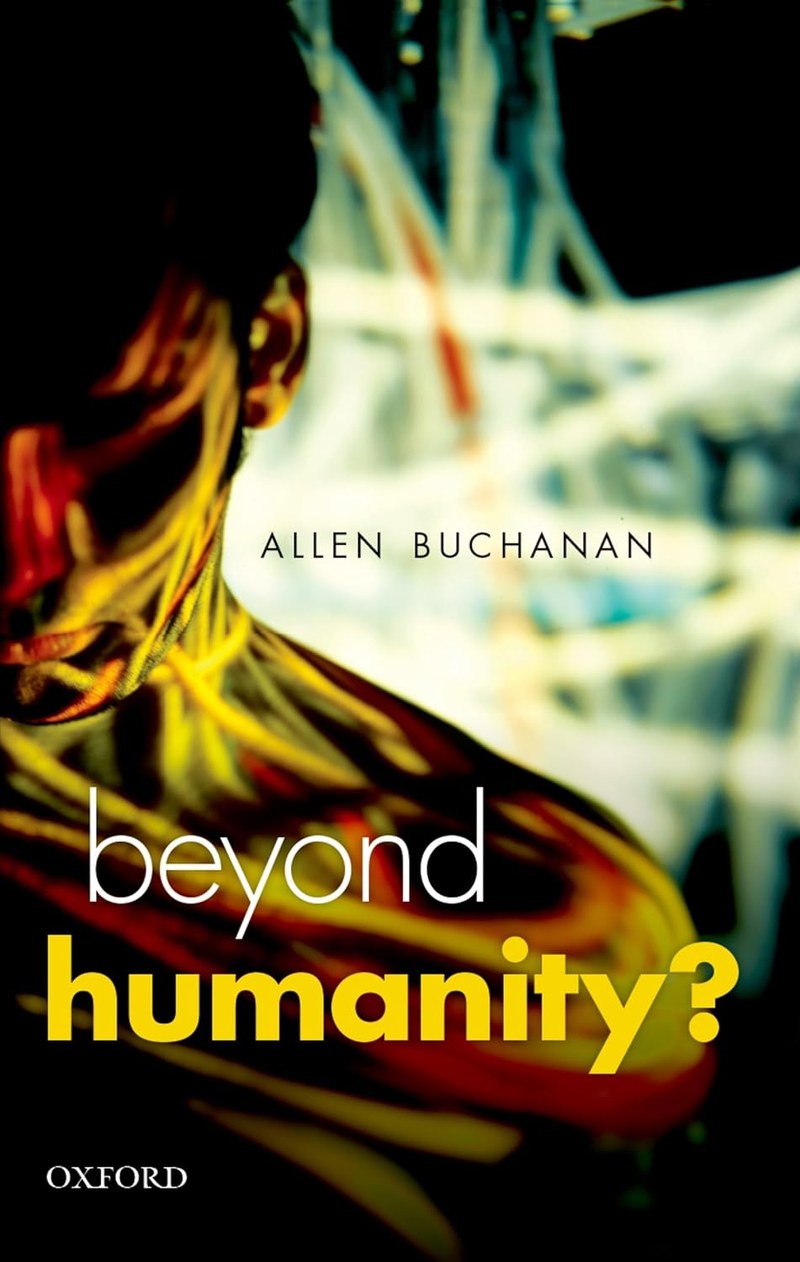
Buchanan intends this book as a philosophical counter to the typical anti-enhancement tomes, Fukuyama’s “Our Posthuman Future” and the Leon Kass-chaired President’s Council on Bioethics report. He rigorously dismantles the bioconservative arguments, blowing their models of human nature, evolutionary biology, and the motives of potential transhumans apart. This book would make an admirable companion to one of these texts in an upper-level bioethics class on enhancement.
Where this book is less effective is in advancing a positive rationale for human enhancement, beyond a vague notion of “correcting nature’s error”, or noting that human beings, the environment, and technology have been continually interacting and evolving. Indeed, Buchanan sidesteps entirely one of the most critical issues in human enhancement: how enhancement research might be done without violating human subject research codes, including the Helsinki declaration, which explicitly bans non-curative research.
The last chapter, on ameliorating the distributive justice effects of innovation through a Global Institute for Justice and Innovation modeled on the World Trade Organization is so detached from the realities of poverty and technological power as to be laughable. The ‘bottom billion’ isn’t poor because of a lack of technology; it’s a lack of governance and maintenance of well-understood technologies, and an inability to compete with the first world on a global commodity market, for example in oil. The GIJI is a nice utopian ideal, but has no bearing on how technologies actually embody power: Robert Moses’ bridges, or software end-use license agreements, for example.
Laying out and demolishing the anti-enhancement claim from a philosophically rigorous position is a useful good, but this book provides relatively little guidance on what it might be like to be an ethical transhuman, or how we as a civilization might get to that point.