
Blue Power: How Police Organized to Protect and Serve Themselves
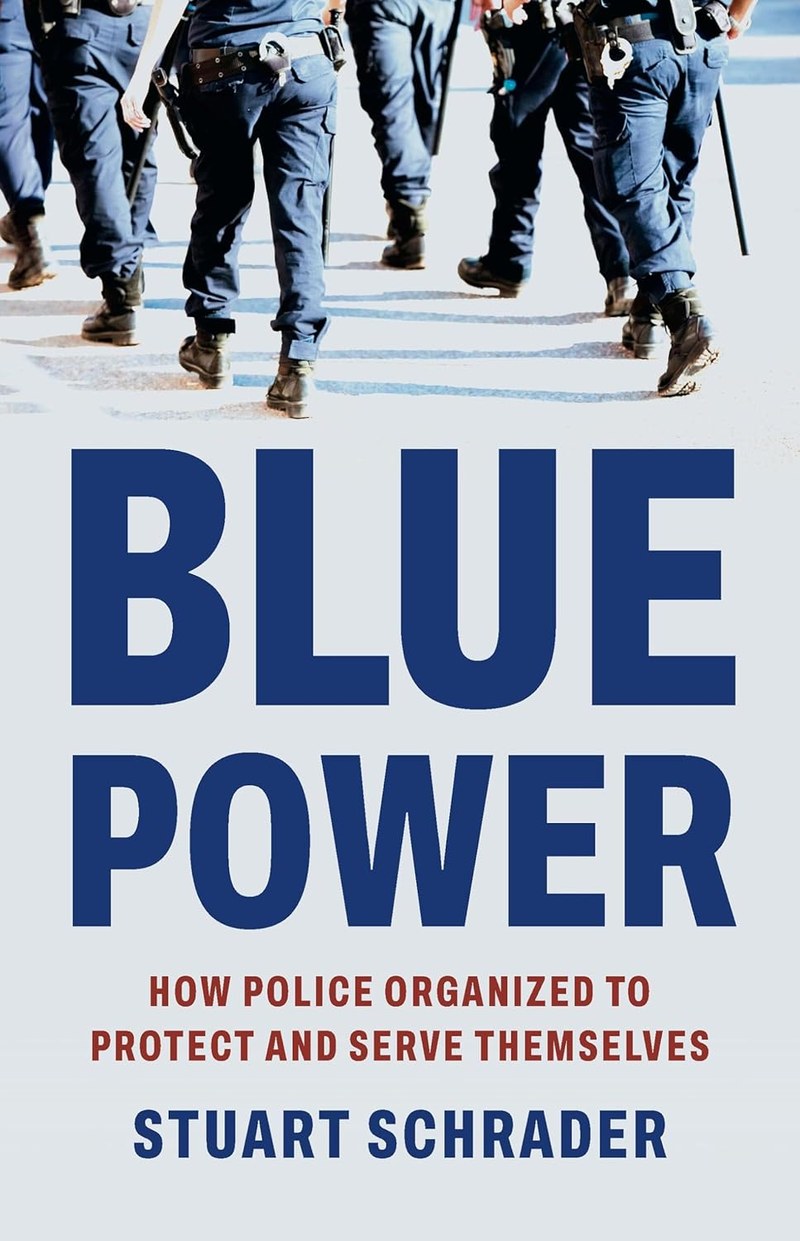
Blue Power is a serious academic study of police labor relations, and how the police became an unassailable local power in the years since World War 2. This is a study of political entrepreneurship on the part of officers and cowardice and incompetence on the part of political leadership, including police chiefs and elected officials from mayors up to Federal offices. Schrader structures his book around the tactics and rhetoric the rank and file used to seize power from their bosses.
In the early 1960s, the basic issue was one of pay. Police salaries lagged behind other public sector employees and far behind the hot private sector. Rank and file cops sought higher wages, but police had a tense relationship with the mainstream labor movement. Police political organization, such as it existed, was focused on chiefs and locally disorganized brotherhoods and federations, who were more social club than activist group.
The first major tests came as the Civil Rights Movement, Johnson’s Great Society, and Black Radicalism combined to light American cities on fire in a series of riots around 1968. These urban uprisings galvanized police as the barrier between society and chaos. Pressures around racism (police were deeply segregated and agents of enforcing segregation) and integration, and newly available federal grants, as well as an ideology of technocratic liberalism, encouraged reform, education, and the beginnings of police power.
As the American economy slowed in the 1970s, police pay and especially pensions became an anchor around many municipal budgets. While police were formally prohibited from striking, wildcat actions like sickouts and work-to-rule enforcement slowdowns demonstrated the power ordinary officers had over their nominal superiors.
Aside from salary, the main focus of the issue was police discretion. Officers are hardly robots, and have constant options about who to stop and investigate, when and how to escalate a situation, and how to frame official events. The basic principle was one of solidarity: officers were always right in the moment, and could not be held accountable afterwards. Civilian review boards were anathema. Disciplinary procedures were slowed down and made biased to cops. In one notable case, the Detroit Federation of Police (I might have the city and organization wrong, but the details are correct) intervened to pay $5000 to a Black prostitute who’d been raped by two Black officers for her to drop the charges. Solidarity crossed racial lines, even over obvious criminal malfeasance.
In the 1980s, with these gains secured, police turned to matters of culture. “Support the police” was a bipartisan issue, with police able to garner support from then-Senator Biden on public safety and budget issues, and then cross the aisle to stand with Republicans on cultural issues against further civil rights advances. In the 1980s, Rep. Mario Biaggi led a crusade against “cop-killer bullets”, a basically nonexistent threat of Teflon coated ammunition that had slightly enhanced performance against armored vests. Criminals didn’t use specialized ammunition, many officers refused to wear vests, ordinary pistol shots that hit limbs and heads were plenty deadly, and rifles punched trivially through vests anyway. A campaign against a basically non-existent problem would characterize future police activity.
The 1980s also saw the rise of the War on Drugs, and the use of asset forfeiture as a major source of revenue. Cops had an incentive to shake people down for cash and valuables suspected to be linked to drug trafficking. The rewards were split between departments and local governments, while questions about how much of this was genuinely connected to drugs were left unasked.
If the bipartisan consensus around more cops lasted through the 1990s and 2000s, it shattered in the 2010s. Black Lives Matter drew attention to the disproportionate violence of police against Black people. The slightest political nod towards the idea that maybe officers shouldn’t just open fire on Black kids from figures like Barack Obama and Bill de Blasio prompted symbolic police revolt, exemplified by officers turning their back to Mayor de Blasio en masse at funerals.
With Trump’s presidency, the police picked their side. Trump’s encouragement of racist violence gave police exactly what they wanted. Police organizations are now steeped in MAGA propaganda. As ICE enforcement operations demonstrate, the violence is the point. If the police had once been “professional”, they’re now a self-reinforcing cauldron of hate, with the main expertise being structuring overtime to maximize pension payouts.
This is a social and labor history, and I wish Schrader had focused more on the economic and effectiveness issues of policing. The tragic fact is that police are incredibly bad at solving any crime more complex than “We searched a guy and he had a baggie of drugs on him.” Clearance rates for murders, rapes, and major thefts are in the single digits and often sub-1%. 9 out of 10 charges are plea-bargained away, frequently on the basis that pre-trial imprisonment is more disruptive to the suspect’s life than a guilty plea. “Defund the Police” should have been taken more seriously as a policy, a call to redirect budgets to things that actually improve the lives of citizens, rather than a praetorian goon-squad.
This is a serious and sober book about how Blue Power happened. While cops have the raw ability to direct violence, their legitimacy is a matter of construction. It’s time we begin dismantling that wall.