
By the Sword: A History of Gladiators, Musketeers, Samurai, Swashbucklers, and Olympic Champions
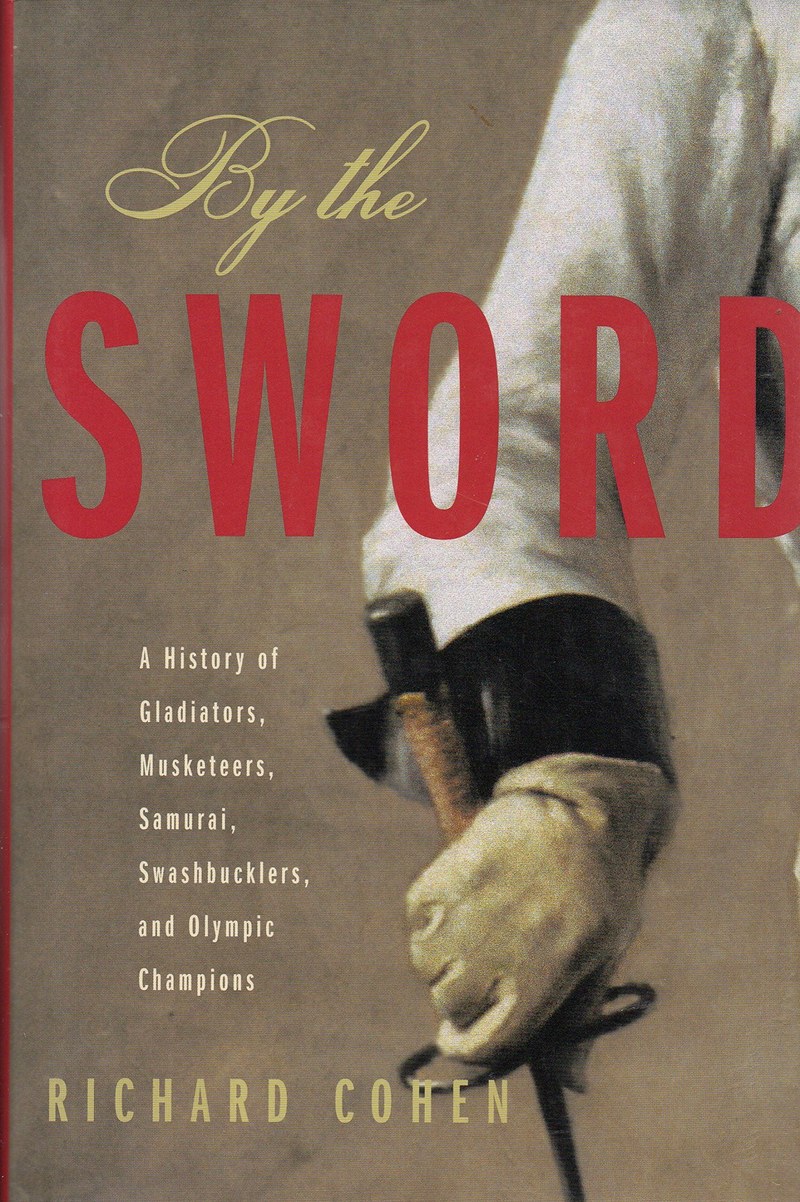
By The Sword is a charming if somewhat scattered account of dueling and fencing by editor, author, and fencer Richard Cohen. Cohen is a serious competitor: five times UK saber champion, member of the UK Olympic team in 1972, 1976, 1980, and 1984, and World Veteran saber champion in 2004 and 2005 (a competition for fencers over 40). He knows this subject inside and out, though his interests may not align with most readers. A sense of the priorities of the book can be given by the table of contents, which devotes similar page counts to the history of the sword from ancient Egypt to Waterloo, and post-WW2 professional fencing scandals.
Swordsmanship was once serious business, a primarily military arm for millennia. Even if spears were almost always the primary weapon, swords had style and prestige. As gunpowder dominated the battlefield, swords switched to a social weapon. The 18th century was crazy for duels, and the 19th century only slightly less so. Any serious man knew he might be called upon to defend his honor at the point of a blade, and it’s almost easier to find a significant artistic or political figure who did not fight duels than one who did.
As the 19th century wore on, and the pointless bloodshed of duels attracted social opprobrium rather than praise, dueling turned into the sport of fencing. Fencing carries with it much of the romance of serious swordplay, as well as a combination of intellectual skill and physical agility that makes it appealing. Cohen’s own 4 Olympics is demonstration enough: I can’t think of another sport where a world class career might reasonably stretch over several decades.
Though the image of fencing is one of honor, the actual sport at the highest levels is full of horrific ethical lapses. Fencers have made easy alliance with authoritarians, both Fascist and Communist, though they’re hardly unique among athletes in that respect. More seriously, fencing is full of subjective calls about the validity of a hit, and referees are known to favor champions and national allies. There have been cases of altered equipment which allow a fencer to score a hit at will, and complex arrangements of fixed matches to promote one fencer over another. The reality of the sport is a far cry from the ideal of sportsmanship and the honorable self-denial of calling your own good hit.
Some of the more interesting, if overwritten parts, are around some of the cultures of dueling. There’s a lot of standard Japanese weeabooism around the katana and samurai. German mensur fencing, with its purpose of creating facial scars, is a particularly bizarre practice to modern eyes. An aside on Italian dueling notes that of any 100 19th century duelists, 30 were army officers, 26 were journalists, and the remainder every other profession. Journalists tend to get into trouble!
Dueling itself is one of those insanely weird practices. Somehow people became lifelong friends after seriously trying to kill each other. Yet the human wastage was also incredible. Galois, a talented mathematician killed at 20 in a duel, is one of the first talents that comes to mind as murdered by honor, but even a clod had a mother, father, siblings, lovers, friends.
Still, who among us has not wanted to draw steel and settle their issues once and for all?