
Everybody Loses: The Tumultuous Rise of American Sports Gambling
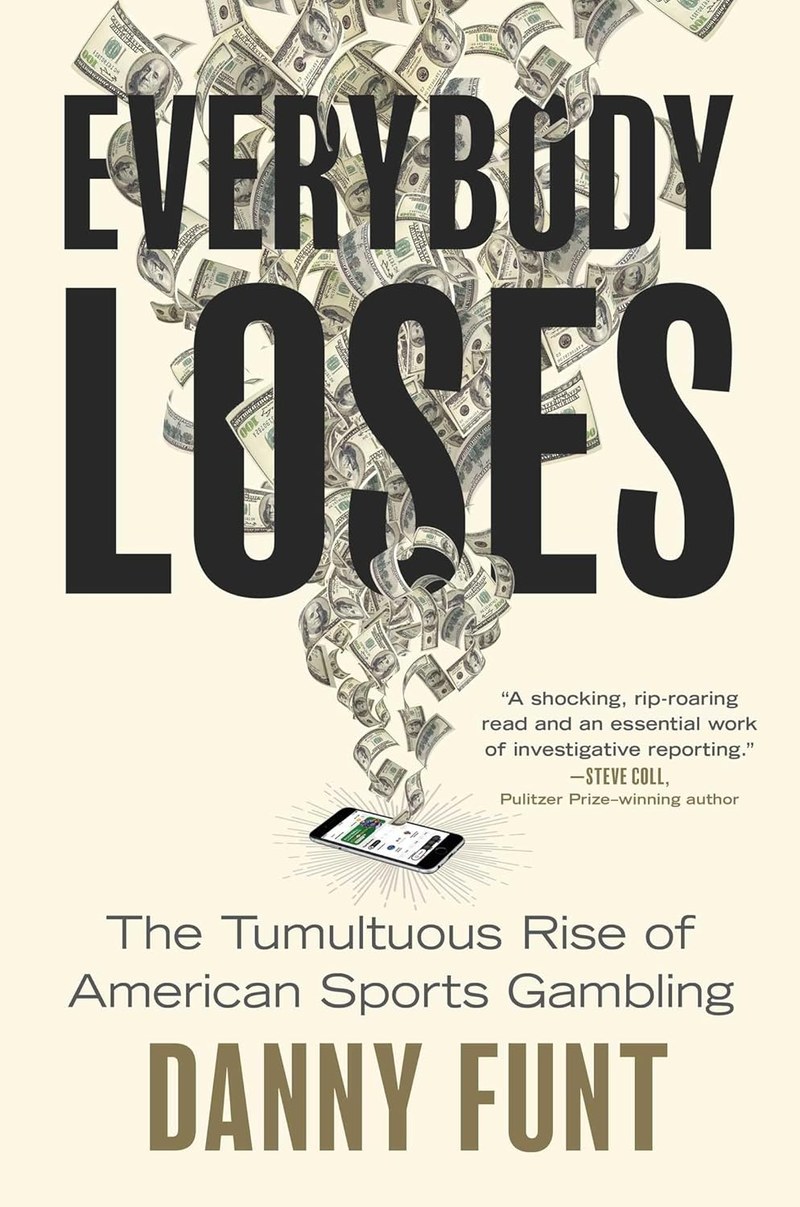
I am not a sports fan or a gambler, so the world of sports betting is entirely opaque to me. But one thing Max Read, my canary in the coal mine that is the internet, said back in 2024 rings entirely true, “One political issue young American men are genuinely passionate about is their absolute right to lose a ton of money on an app in a really stupid way.” Everybody Loses is the story of how we got there.
Funt has been following this story for a long time. The general consensus, since the 1919 Black Sox World Series fixing scandal, is that sports and betting should not mix. Sure, everyone knew that some people gambled on sports, but it was a disreputable activity. For anything bigger than $20 between friends, you had to go to Vegas, know Mob affiliated bookies with creepy names, or sign up for a variety of sketchy offshore websites.
In the early 2010s, public opinion began to shift. On weak evidence, the leagues decided that the market for sports betting was $400 billion annually. More robustly, gamblers watch a lot of sports, roughly twice as much as ordinary fans. In 2014, incoming NBA commissioner Adam Silver published a New York Times opinion piece arguing in favor of legalizing sports betting. New Jersey decided to test the waters, allowing sports betting in violation of the Professional and Amateur Sports Protection Act (PASPA). In 2018, the Roberts court decided on procedural grounds around federalism that PASPA was unconstitutional. The floodgates were open.
Funt takes us on a tour of athletes, sports books operators, and pro and amateur gamblers, and shows that the implementation has been a disaster. For all that the betting companies, primarily a duopoly of FanDuel and DraftKings, claim that it’s entertainment and they have robust responsible gaming policies, the actual practice is one of finding vulnerable people and exploiting every trick in the book (and inventing new ones) to have them make bad bets.
The apps specialize in props, bets on specific aspects of a single game like how many free throws a single player will make in a half, and parlays, multipart bets that only pay off if all parts hit. The app design encourages constant engagement on very low probability events. Gamblers are separated into squares and sharps. Sharps, who demonstrate some modicum of statistical knowledge, have hard limits on how much they can bet, down to a single cent. Squares are cosseted with “risk free bets” (a bald-faced lie), deposit matching, and VIP perks up to Super Bowl box tickets and announcing the start of NASCAR races.
Every bit of evidence suggests that sports betting is an individual and social disaster. Gamblers report losing their love of the game and getting lost in addiction, with some winding up broke or millions of dollars in debt. The companies are perfectly happy to take an entire career worth of money from a retired pro athlete, or pointedly not ask where a Cheesecake Factory assistant manager is getting $300,000 annually to bet. Athletes report abuse from gamblers for playing in a way that causes their bets to lose. Belief in the integrity of the sports is plummeting.
Even the corporations involved are doing poorly. Most sportsbooks have gone broke, unable to compete with the deep pockets of FanDuel and DraftKings. The only people benefiting are the leagues, who have a new revenue stream licensing gamblers, and the states, who have a new tax stream, though one balanced out by the taxes they’re not collecting on the people involved, and more than balanced out by the social consequences.
The only fair comparison seems to be with cigarettes. Sportsbooks are selling a deliberately addictive product that wrecks people’s lives. They target kids, get them hooked, and run off before the consequences manifest. The best evidence for gambling’s effectiveness is that companies are willing to pay upwards of $1000 for a new customer.
These are rational people. They know the odds. They expect to make a lot more.