
Favela: Four Decades of Living on the Edge in Rio de Janeiro
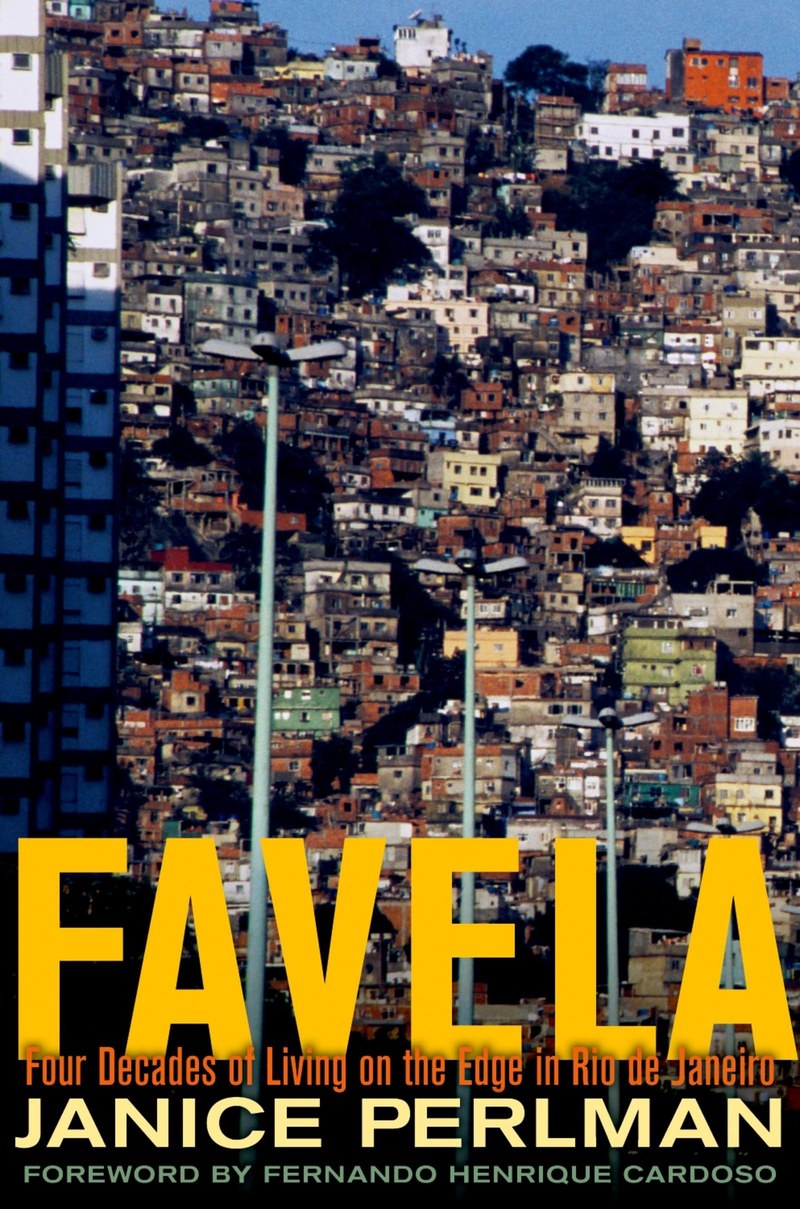
Favela is a sociological triumph, the distillation of decades of experience in the Favelas of Rio De Janeiro, and an important book for anybody interested in urban living, State power, and the future of humanity. The majority of the population now lives in cities, and the fastest growing cities are the informal shanty-towns surrounding the old urban centers. This is where the bottom billion lives, outside the reach of government planning and oversight, and the ways in which they survive will in large part shape the structure of society.
The body of the book is based on Dr Perlman’s original work, a survey of life in the favelas in the late 1960s. By tracking down many of the original participants, and their children and grandchildren, she was able to accurately trace social mobility, success, and failure across generations. The results are surprising. Favelas are far from excluded from the fabric of the city, urban relocation programs have had some conditional successes, and legal title does not matter so much. Favela residents overwhelmingly believe in middle-class aspirations, and that their children will be better off than they are.
But more than the success of Favela residents, the real problems have been the growth of the drug traffic since the 1980s. Money, violence, and drugs harm everything in the city, from ordinary civilians caught in the crossfire, to teachers and nurses too afraid to travel to the favela, to local politicians bought and paid for by the drug lords. In Rio, the problem is exacerbated by militias of off-duty police and soldiers, who wage an indiscriminate war on drug dealers, funded through extortion.
The risk for the Favelas, and for similar informal cities, is that they slide from ungoverned zones to ungovernable zones. In a world awash in drugs, refugees, and sectarian hatred, it is far too easy for weakly administered zones to be taken over by criminals and terrorists. While Favelas never became wellsprings of Revolution, they provide a fertile breeding ground for bloody urban insurgencies.