
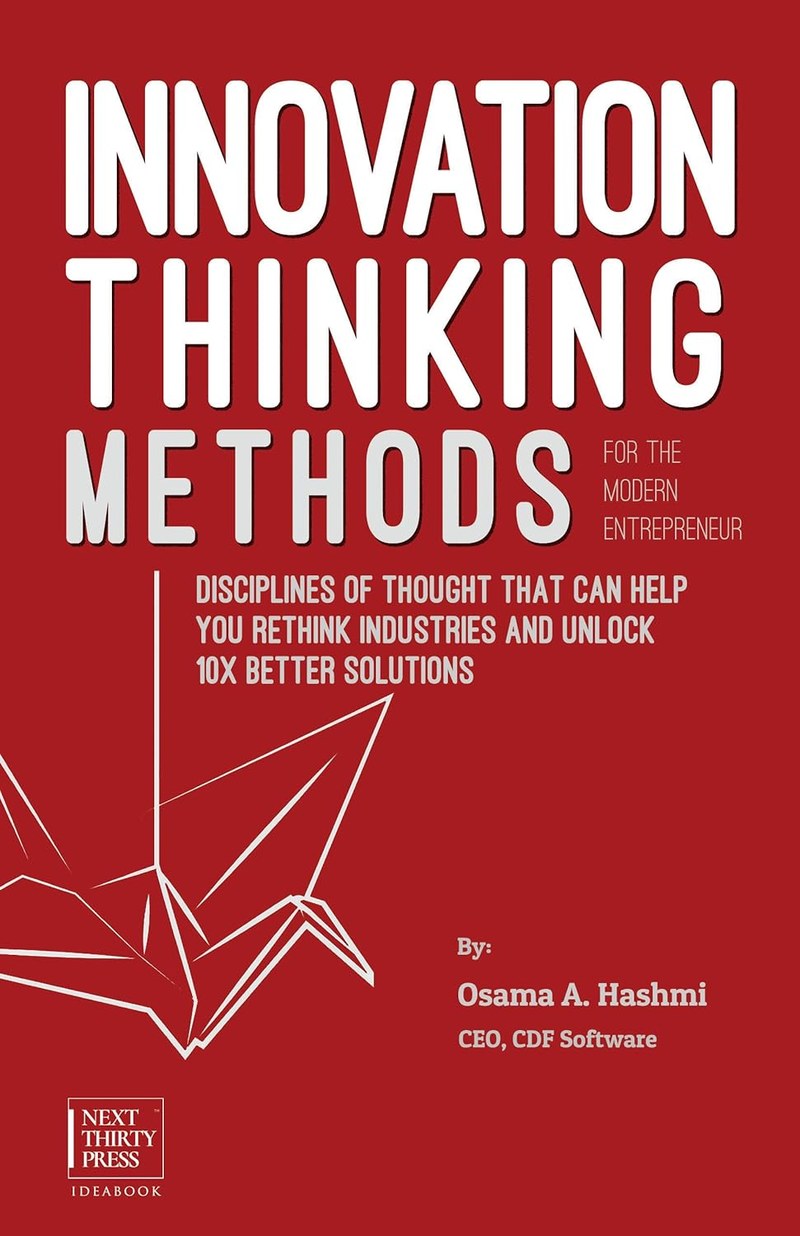
Innovation Thinking Methods for the Modern Entrepreneur: Disciplines of thought that can help you rethink industries and unlock 10x better solutions
Disclosure: I received a copy of this book in exchange for an objective and honest review. I’ve received no other compensation.
Hashmi thinks innovation is hilariously broken in general, and that in particular Silicon Valley start-up culture is focused on chasing its own tail, on management fads, and on eking out minuscule margins rather than making big changes. This book is his attempt to change that culture. It’s structured as a series of short thoughts, on pitches, on patterns, on breaking ahead of the curve, and written in a breezy and conversational tone, with links to TED talks rather than footnotes to academic tomes and policy white papers. As a guide to founding a start up, to having it be a good idea, to successfully pitching it to various venture capital rounds, this seems like useful advice.
However, the flip side of that is worrying, and I’m a science policy scholar, so I’m on the flip side. Say that you have a substantial chunk of money to invest in a company (some people, some ideas, some tech). Your choices are people who have some sort of data-backed statement that they’re 3% better than the existing alternatives in a massive market, or a group of people who claim that they’re passionate, that major disruption is coming just down the pipeline, and they’re the people who are ready. Do you go for the staid, conservative, incremental group, or do you bet the farm? How, in the absence of prior evidence, do you distinguish between innovators and cranks? This is the hard question, and a readable applied version of Christensen’s “innovator’s dilemma” isn’t quite it. Hashmi said he was deliberately avoiding anecdotes which may not be applicable to your circumstances, but I wish I had a little more data from the trenches to justify the rather general ideas about thinking bigger.