
Missileman: The Secret Life of Cold War Engineer Wallace Clauson
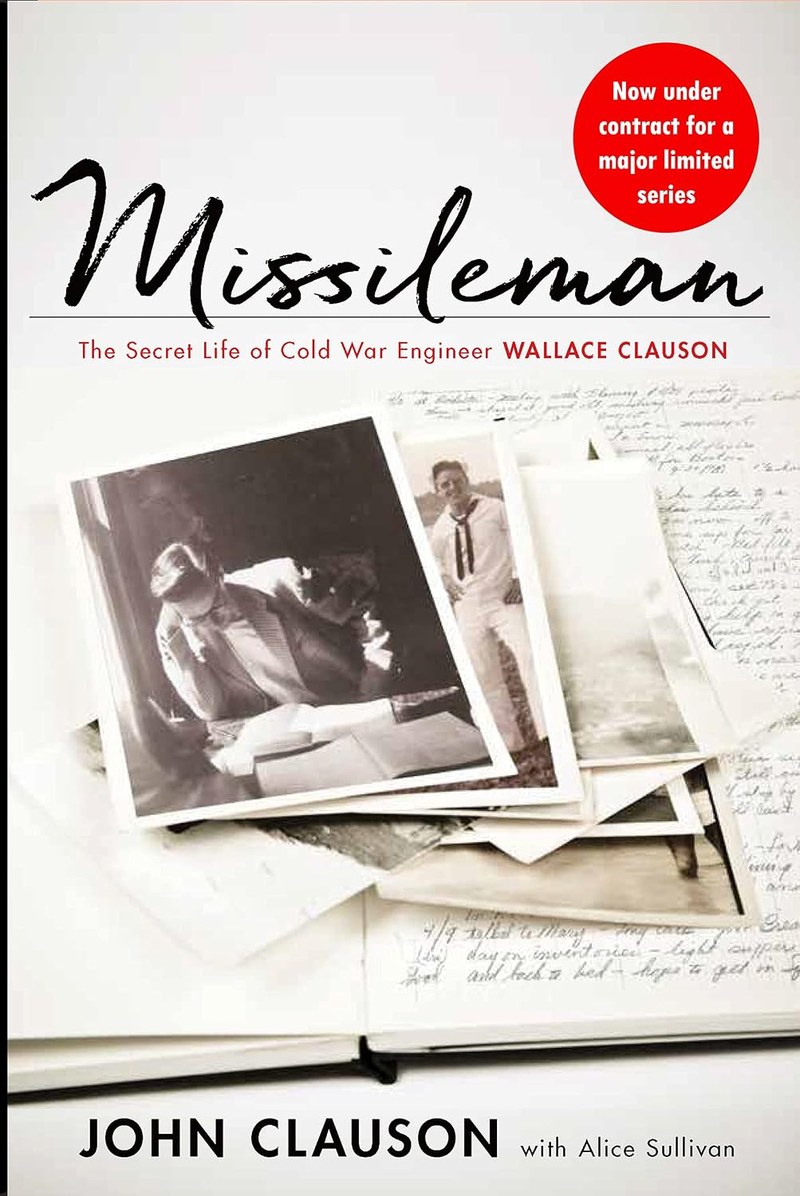
Missileman is an interesting entry in the genre of “what my dad did in the war”, with its unique premise hampered by a wall of classification and redaction. Growing up, John Clauson thought his father was a salesman for IBM. It was only a few months before his father’s death that he learned that while his father did work for IBM, he was a senior engineer for their secretive Federal Services Division. Wallace Clauson’s real job involved getting the latest strategic nuclear weapon systems operational, which included being in the command bunker for the Able Archer 83 exercises and helping the Shah of Iran spin up his nuclear weapons program.
The book shines on the personal details, especially around the parallel paths of the elder and younger Clausons growing up. Wallace was born in 1923 in rural Iowa, the son of an alcoholic in a tight-knit Swedish farming community. When he was 11, he nearly died in a car crash, and when he woke up, Wallace had savant-level mathematical abilities. He earned spare cash correcting college textbooks for an East Coast publisher, and when the National Defense Research Committee went looking for applied mathematicians, the publisher said that they had this kid prodigy who was worth checking out.
Wallace apparently blew away the NDRC interviewers, dashing to a cafe from basketball practice to solve a tricky math problem that should’ve taken two hours in two minutes. After graduating high school, Wallace was sucked into the classified world of defense research. He was assigned to work with John Vincent Atanasoff at the University of Iowa on digital computers and radar. He had a cover as an undergraduate, where his forged transcript showed him getting a C- in algebra, but his real work was in the lab. He then spent a few years in the Navy, calibrating radars along the Gulf of Mexico, and was then pulled back into defense research with another forged academic post at the University of Minnesota, this time in the PhD program. He was benched and asked to pretend to be a farmer for a year during a mole hunt, and then joined IBM full time. During this period he worked with John von Neumann, Edward Teller, and Albert Einstein.
Meanwhile, during all these Cold War intrigues, he married his high school sweetheart Marilyn Malmquist (they were two of a class of eight—it was a very small town) and had four kids. She seemed entirely comfortable with vagueness around what her husband did, or the frequent and arbitrary moves.
The second interesting arc is John’s fraught relationship with his father. Wallace was a workaholic, even beyond his job, and his love language was home improvement projects. Security restrictions meant that Wallace shied away from even minimal public recognition, like “I’m proud my dad is here today.” Ordinary teenage rebelliousness, which meant John’s drinking and partying, cut hard against Wallace’s national security paranoia and deep-rooted Christian morality. To the elder Clauson’s credit, with a 24/7 government security team watching his kids, he kept his level of control to a hands-off “I know you’re drinking. I don’t like it. Try not to embarrass the family.” Wallace’s main solace working on the machineries of Armageddon was his belief that God would not let the world be destroyed on a Sunday.
Missileman is a fine book, but I really wanted more about what Wallace Clauson actually did. He worked on the development of the IBM 704 and then the installation of similar computers all over the world. I’m both a computer programmer and computer history buff, and this book’s answer is a “Wallace did a lot of math that aimed missiles”. There’s a 20 year gap between when Wallace told John this story and the book coming out, and unfortunately many of Wallace’s secrets went to the grave. The paper trail is classified, redacted, or just never existed, and unfortunately a lot of the important details of the work are simply not here. We know that Wallace participated in critical matters of nuclear national security, but this book has us take his importance on faith.