
Mood Machine: The Rise of Spotify and the Costs of the Perfect Playlist
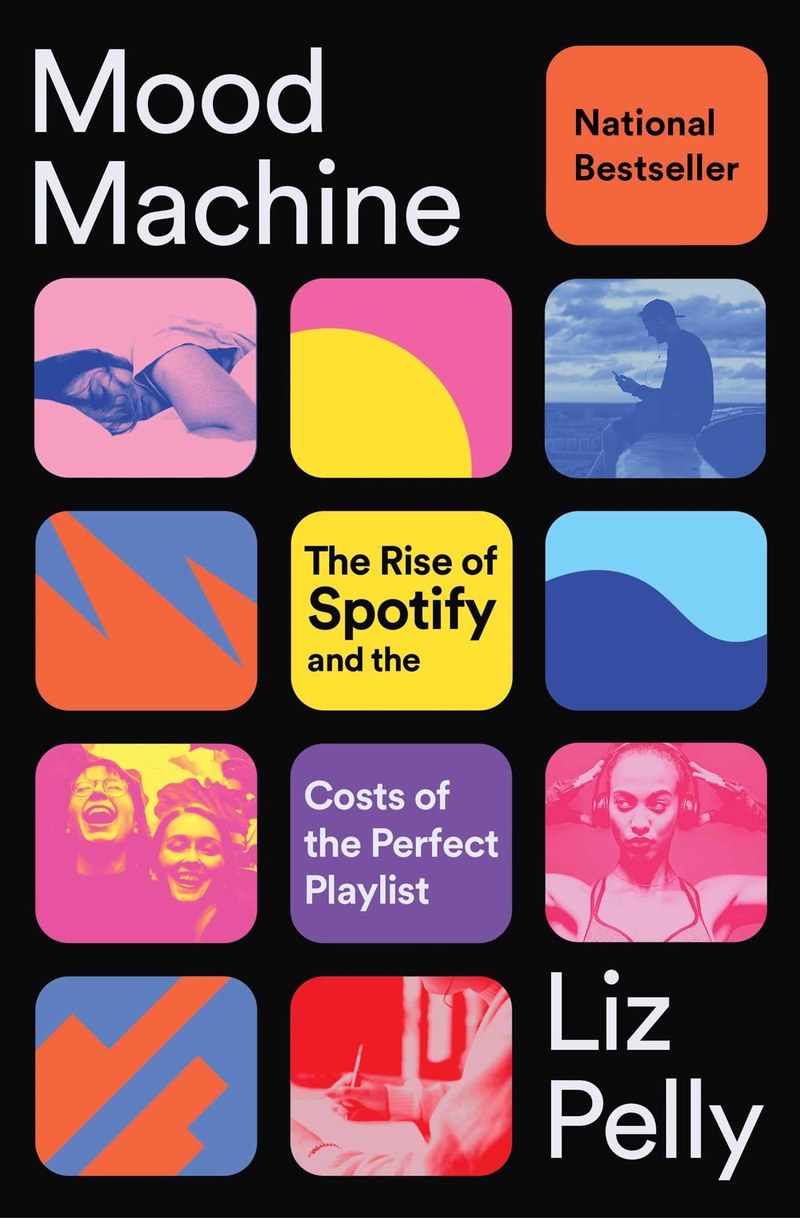
Pelly is a veteran music journalist and this is the story she’s been working on for a decade about the social, financial, and aesthetic costs of Spotify. As someone who’s been there for most of the story, if not paying a professional amount of attention. She has it exactly right. This is a story that has to be told more widely. In my review of Seaver’s excellent Computing Taste, I note that there’s a book to be written about the social consequences of Spotify. This is that book.
She traces the origins of Spotify in the pirate culture of the early 2000s. While peer to peer music downloading (aka piracy) had been pushed back in most of the world, Sweden’s robust broadband infrastructure and privacy protection meant that Sweden was an exception. Spotify was founded in 2006 by Daniel Ek and Martin Lorentzon in an attempt to monetize this situation somehow. At first, Spotify was just another pirate, with most of its library sourced from bittorrent. The key differences were an engineering focus on creating the fabled “galactic jukebox”, with every song available to stream within 200 milliseconds, and a business plan that involved getting the major labels to buy in. Spotify managed to crack the technical and business problems first, supplanting a variety of internet radio services.
Pelly turns to aesthetics first in the book. Spotify’s key metric was always user listening minutes. In service of this goal, Spotify moved from curated editorial playlists on known themes, to mood-defined playlists based mostly around ideas like vibes and “chill”, and finally Perfect Fit Content (PFC) individually mapped to each user’s tastes via machine learning. Pelly is sensitive to the many roles music can play, but when seen primarily through listening time, music becomes Muzak, aimless background ambiance that primarily is about not being turned off. Emotionally calming audio backdrops have a history as long as recorded music—Thomas Edison was one of the first pioneers. There’s nothing wrong, per se, with calming music, but chill vibes dominate Spotify to the exclusion of anything else; a vast sonic homogenization towards easy listening for millennials.
Secondly, on a social level music has always been about scenes. Scenes are real social communities, bands that are in communication with each other, fans that go to the shows, a historical genealogy. Sometimes a scene becomes big enough that it goes national or worldwide: the British invasion, Motown, East Coast hip hop, grunge, etc. There have always been gatekeepers, whether it be the cool kids, booking agents, record executives, Rolling Stone editors, or Pitchfork bloggers, but the gatekeepers are visible and at least music adjacent. Spotify replaces those gatekeepers with anonymous playlist curators, who serve as last-resort humans in the loop over the collections of songs that are used to fill user-requestion machine-generated playlists. What makes a song get on a major playlist is as random as it ever was, a lie to Spotify’s promise to democratize and flatten musical hierarchies. Most tellingly, in Pelly’s view Spotify playlists are entirely artificial. Yes, there is a thing called hyperpop, but it was a niche internet movement before Spotify renamed a playlist and invented a genre around “sounds like SOPHIE”. From my corner, Indie Sleaze never existed, as much as Brooklyn circa 2004 was a real scene. And no one knows what a Lorem or POLLEN song is, to name two major Spotify playlists.
Finally, as everyone knows, Spotify pays artists peanuts. A stream earns about $0.003 (that’s a third of a cent), though the exact way Spotify pays out is opaque. Except for a handful of billion+ stream superstars, streaming revenue doesn’t even hit artistic penury. Spotify itself has rarely been profitable, although its founders have made hundreds of millions of dollars. The company as a whole is a mechanism for moving the rewards for art from artists to capitalists.
I’ll freely admit to being the problem here. According to my Spotify wrapped (a friendly way of presenting surveillance), in 2025 I listened to 140,000 minutes of music over 13000 distinct songs. Assuming the average song is three minutes, my cost is actually very close to $0.003 a stream. Everybody who listens to less music than me, which is 99% of people, is even more profitable. Having tried all the major streaming services, I do think Spotify’s algorithmic playlist secret sauce is subjectively better. Pelly gestures at a more communitarian future, with library supported streaming services and artists’ collectives. I hope something works. Best I can do is support artists outside of the musical Death Star.