
Road of Bones: The Siege of Kohima 1944 - The Epic Story of the Last Great Stand of Empire
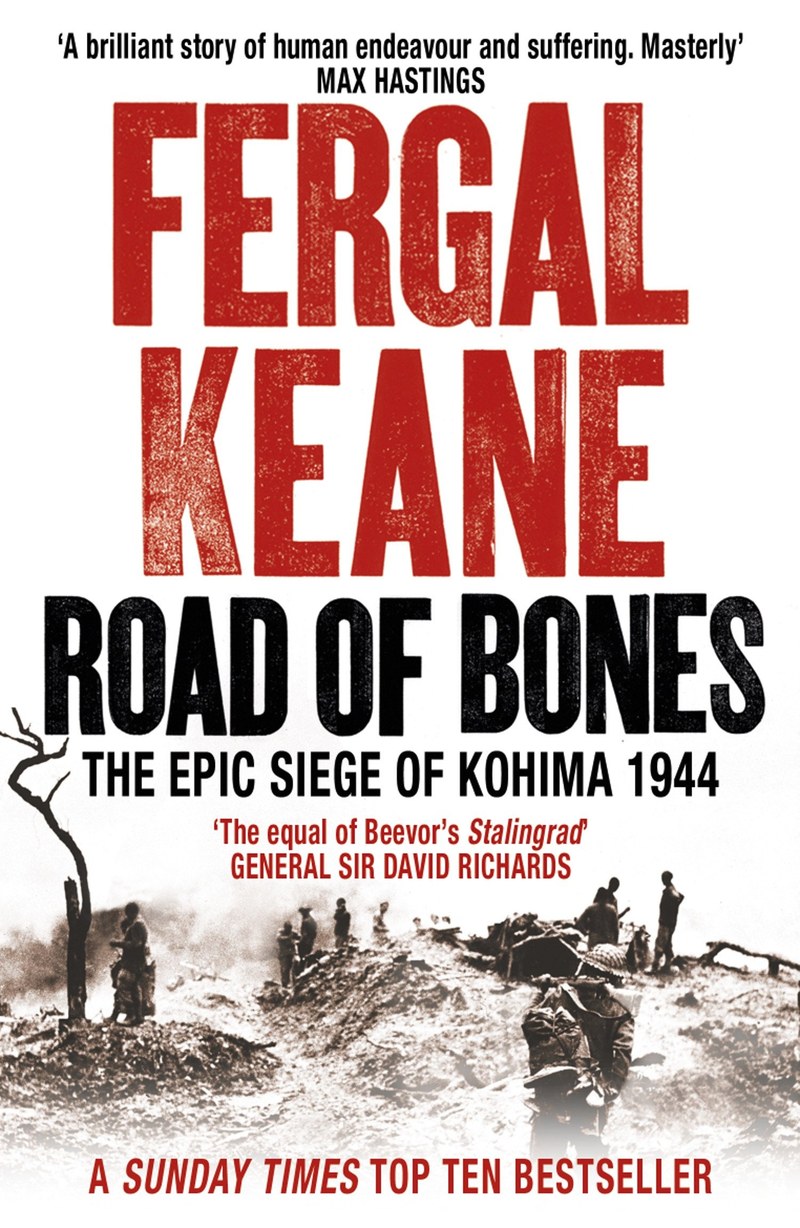
Road of Bones is a masterpiece of military history, using a single battle to illuminate an entire conflict. Burma is the forgotten front of the Second World War. Relative to most military history buffs, I’m an expert in the theater, because I’ve read General Slim’s memoir Defeat Into Victory, but that doesn’t mean that there isn’t plenty more to learn. Kohima was the turning point of the Burma campaign, which Keane uses as a lens to examine the British Empire at its height, and the Japanese Empire at its greatest extent.
The larger campaign of which Kohima was the final battle was one of those grand throws of the dice which had served Japan so well at Pearl Harbor and Singapore, and which would turn against them later in the war. The basic plan was to march an army through hundreds of miles of trackless jungle, across rivers and ravines, to conquer India, the diamond in the diadem of Empire. In the optimistic Japanese plans, Indian sepoy soldiers would turn against their white officers, and the difficulties of moving supplies would be obviated by capturing British stockpiles. This bold attack, carried out with stealth and surprise, would catch the British in their soft underbelly and lead to a wave of retreats and surrenders which would see IJA troops in Bombay in short order.
In execution, this attack required conquering the border post of Kohima first, with the 15,000 Japanese soldiers of the 31st Division facing off against roughly 2500 British and Indian defenders. The Allied forces in Kohima were line-of-communication troops, bolstered by the veteran King’s Own Royal West Kent Regiment and the Assam Rifles. For two weeks, the Allies faced assaults characterized by the fanatic light infantry tactics that the Japanese army relied on. Then a relief column made it through, Japanese food supplies failed entirely, and they began the long, harrowing retreat.
This is more than a military history. Keane captures the entire feeling of the edge of empire in the twilight days of the Raj. I was particularly taken with Ursula Graham Bower, a British woman who was an anthropologist among the local Naga tribes, and who became a guerrilla commander against the Japanese. For reasons of language and literacy, this account is biased towards the British, who had the majority of survivors and surviving documents, but Keane does justice to the Japanese and the Indians who left records. The acrimony between Japanese commanders is astounding, and Keane’s book serves as belated vindication of General Sato of the 31st, who did his best to achieve an impossible mission.
Simply an astounding book.