
Spying on Whales: The Past, Present, and Future of Earth's Most Awesome Creatures
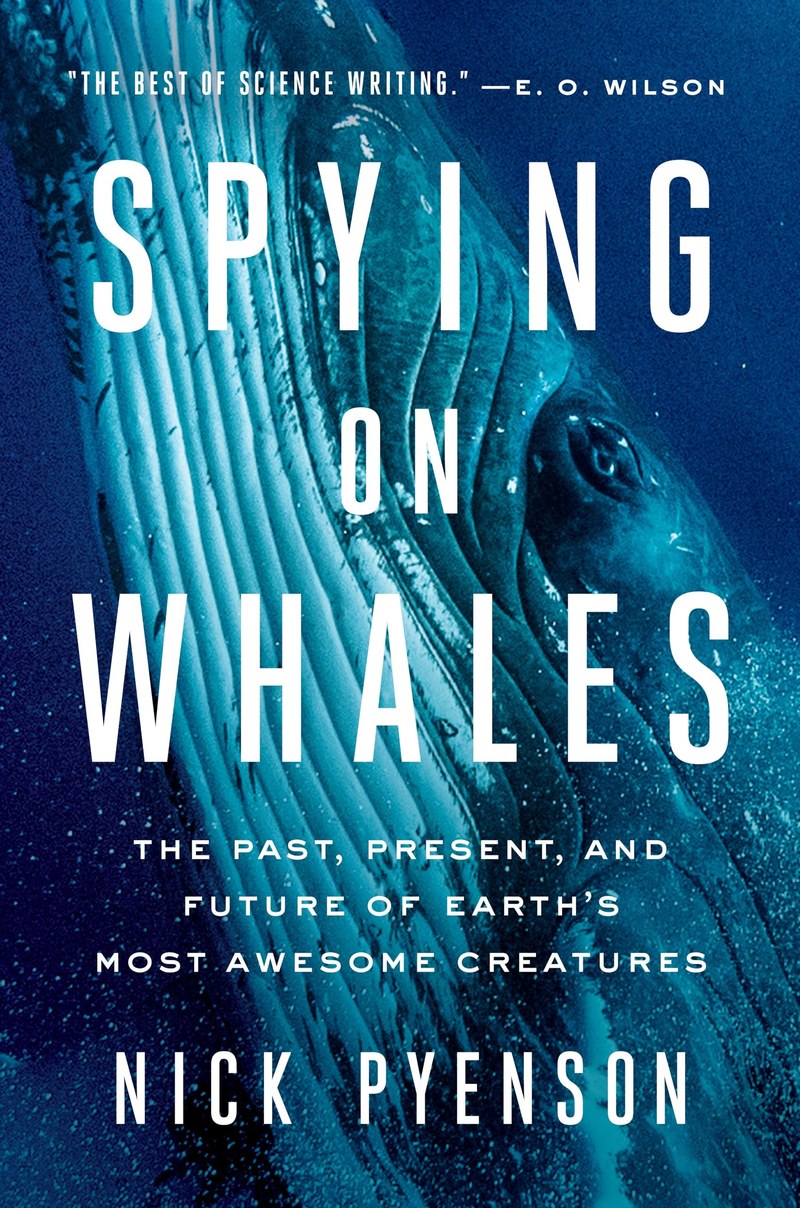
Pyenson is the Smithsonian Curator of their whale collection, and one of the foremost authorities on whales. This book is a tour through the recent science of whales, structured around his personal discoveries. The love of science comes through, but Pyenson is a paleontologist, and in his own words he’s not a whale hugger, so there’s an intellectual distance here.
Whales as a clade are roughly 50 million years old, descending from a creature that looked more like a modern deer than their current ocean adapted form. They evolved detailed aquatic specializations: blowholes, blubber, echolocation, as well as atrophied legs, becoming the specialized sea creatures we know today. A major part of the narrative describes a dig in Chile, where hundreds of well-preserved whale skeletons have fossilized in four distinct events. Another section describes the gory business of anatomy at an Icelandic whaling station, where Pyenson and a collaborator discover specialized sensory organs in the jaw that help baleen whales gulp as much water and krill as they can.
The modern life of whales is inescapable from their near extinction at the hands of industrialized whaling, carried out not by the romantic sailors of Moby Dick but in the 20th century by the brutal machinery of industrialized fisheries. Since their protection, some whales have bounced back. Humpback whales are nearly at their pre-extinction population levels. Other species are not doing so well, gigantic Blue Whales are still rare, and river dolphins are at great risk everywhere. Pollution and climate change are key threats, and we do not (and possibly never will) understand the strange intelligence of these animals that we share the oceans with.
Spying on Whales does a fantastic job conveying the excitement of science, and a weaker job with the whales. Still an interesting book in the popular science genre.