
Such Great Heights: The Complete Cultural History of the Indie Rock Explosion
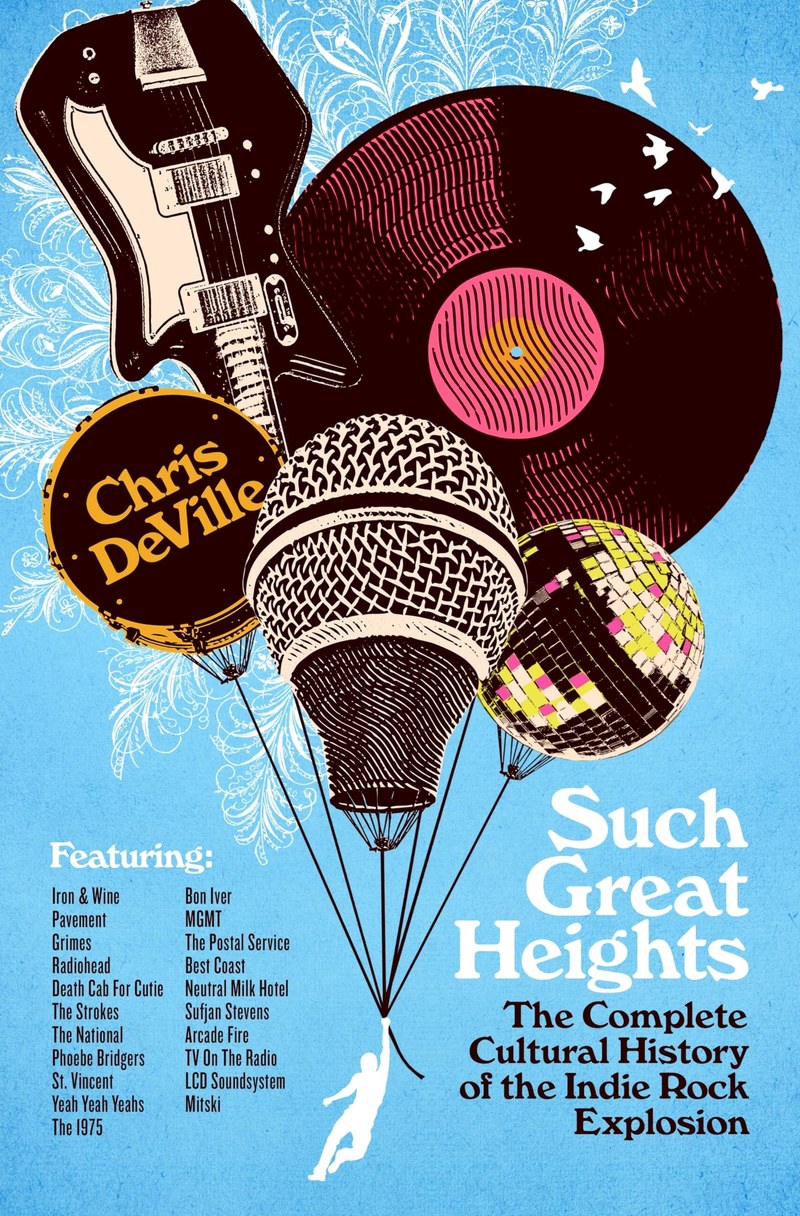
As someone who loves indie music deeply, this is a great book, one that chronicles the rise and institutionalization of “indie” by a journalist who was there, who also loves the music, and who gets the contradictions inherent in the scene. DeVille also mentions a lot of good music with a playlist at the start of each chapter. I’m not just saying that because we share the same taste. Playlists are on Spotify.
First, what even is indie? The most objective answer is that it’s a band not signed to one of the Big Three music labels, Universal Music Group, Sony Music Entertainment, or Warner Music Group. Of course, lots of bands with indie cred and style were signed to these labels. Another way might be a particular sonic aesthetic; for the early 2000s, DeVille describes indie as “a band that sounds like Pavement”, though that sound would change a whole damn lot, as the book explores. Or it’s social, coming from a particular local scene, and later celebrated by Pitchfork rather than the traditional gatekeepers. But perhaps the best definition is that indie is an attitude towards what’s cool: intellectual, eclectic, cutting edge, ironic, kinda sad, kinda dancy, respecting unconventionality while not afraid of mainstream success.
DeVille is a few years older than I am, and he describes that rapturous moment in the early 2000s when he broke out of the binary of Nu Metal and Pop Divas that defined the cool options and started finding his own music. The internet was key to this, with Napster and iTunes making any song accessible, not just what was in the local record store or on the air, and mp3 blogs led by Pitchfork driving a frenzy of discovery over the next big thing. And over the next decade or so, indie conquered the world.
The 12 chapters in this book take us through a variety of scenes, from what would retrospectively be named “indie sleaze” in hipster New York, to the TV-ready ballads of The OC, to electronic indie dance, fuzzed out neo-psych, “Ho Hey”ing indie folk, the synthesis of conscious backpack rap and indie tunes in Kanye West’s transformative albums through Yeezus, and eventually the subsummation of indie in mainstream pop.
The scene grew, transformed, splintered, and was coopted. In some ways, this was for the better. Indie of the early 2000s was often elitist and mean in ways that were racially and sexually problematic. While the genre is still a lot of white dudes with guitars, it has become more diverse. The Rockist vs Poptimism debate was decided in favor of the poptimists, with the logic that if it sounds good it is good and fuck authenticity.
The downside was that with the loosing of boundaries, a lot of things did get blurred. If indie was supposed to be provocative, why were rising artists drawing from the safe sounds of adult contemporary and cheesy yacht rock? Is this about artistic skill and statements, or a frictionless backing sound for a coffee shop or pool party?
The book is titled after The Postal Service’s breakout hit “Such Great Heights”, but DeVille notes that an alternative and better title could be drawn from LCD Soundsystem’s “Losing My Edge”, where James Murphy’s semi-autobiographical aging hipster discusses how he’s still cool, still cutting edge, and how music is cyclical as bands sell their guitars for turntables and then synthesizers for guitars. Every revolution either fails or becomes The Institution, and an army of millennials (myself among them) singing along to Ben Gibbard at a The Postal Service/Death Cab for Cutie 20th anniversary tour demonstrates this. The kids are off doing something cooler.