
Superfortress: The Boeing B-29 and American Airpower in World War II
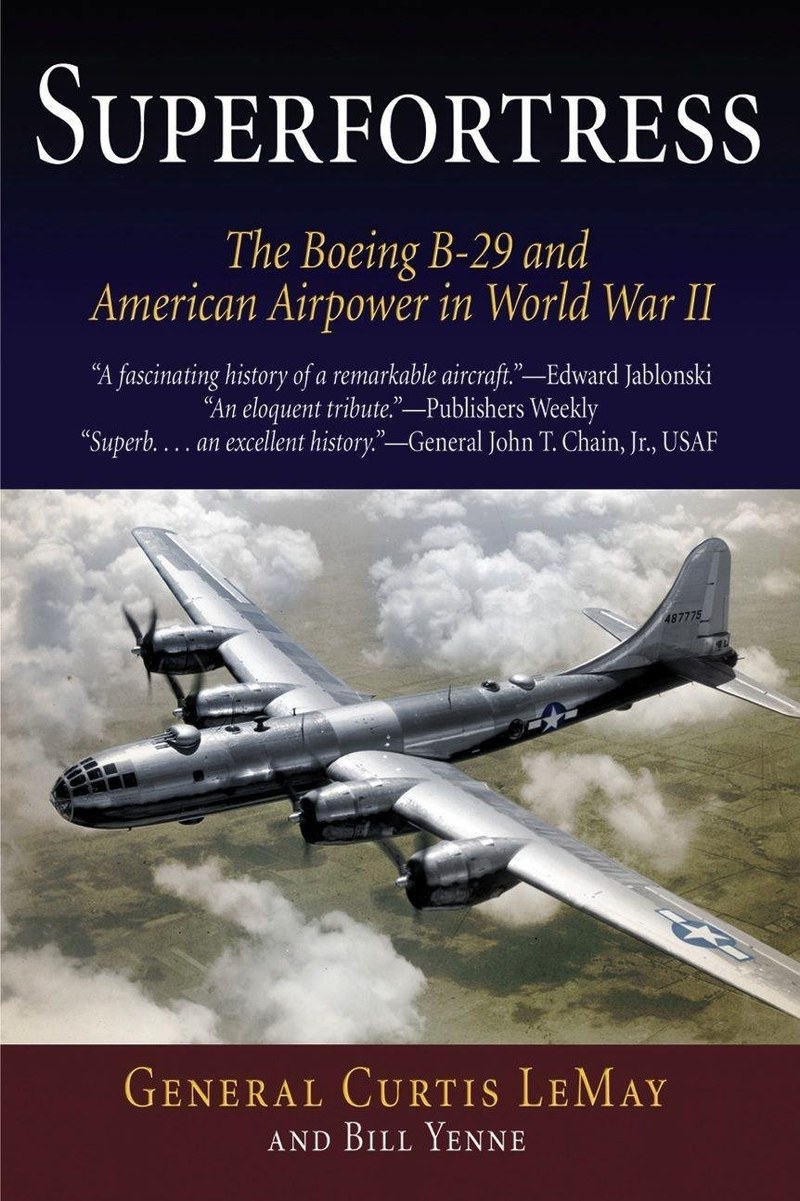
Superfortress is a paean to strategic airpower written by one of its foremost practitioners. General LeMay and his coauthor Bill Yenne describe the development of American bombing strategy, starting with Billy Mitchell and continuing through the development of the B-29 in the early 1940s. One thing that is clear is that while Japan was LeMay’s opponent, LeMay’s enemies were the US Army and the Navy.
The story then takes an abrupt turn to the practical as LeMay describes his own command of the XX Bombing Group, first staged out of India and China, and then Guam. LeMay was relentlessly focused on delivering maximum destruction and made several innovations. The first was a centralized maintenance system that saw his command flying 120 operational hours a month, compared to 30 hours per month for the 8th Air Force based in Europe.
The second was the use of low level incendiary bombing to demolish entire Japanese cities, with tens to hundreds of thousands of civilian casualties per raid as well as mass homelessness and starvation. LeMay has no second thoughts about his actions. The goal was to win the war as fast and efficiently as possible. The Japanese government should have protected its people, if they were able.
LeMay’s real ire is directed towards skeptics of strategic airpower in the Army and Navy who diverted development resources away from heavy bombers, and who then diverted bombing missions away from maximum damage to merely tactical ends. LeMay is absolutely unshaken in the decisive potential of airpower, Korea and Vietnam aside.