
The Devil's Broker: Seeking Gold, God, and Glory in Fourteenth- Century Italy
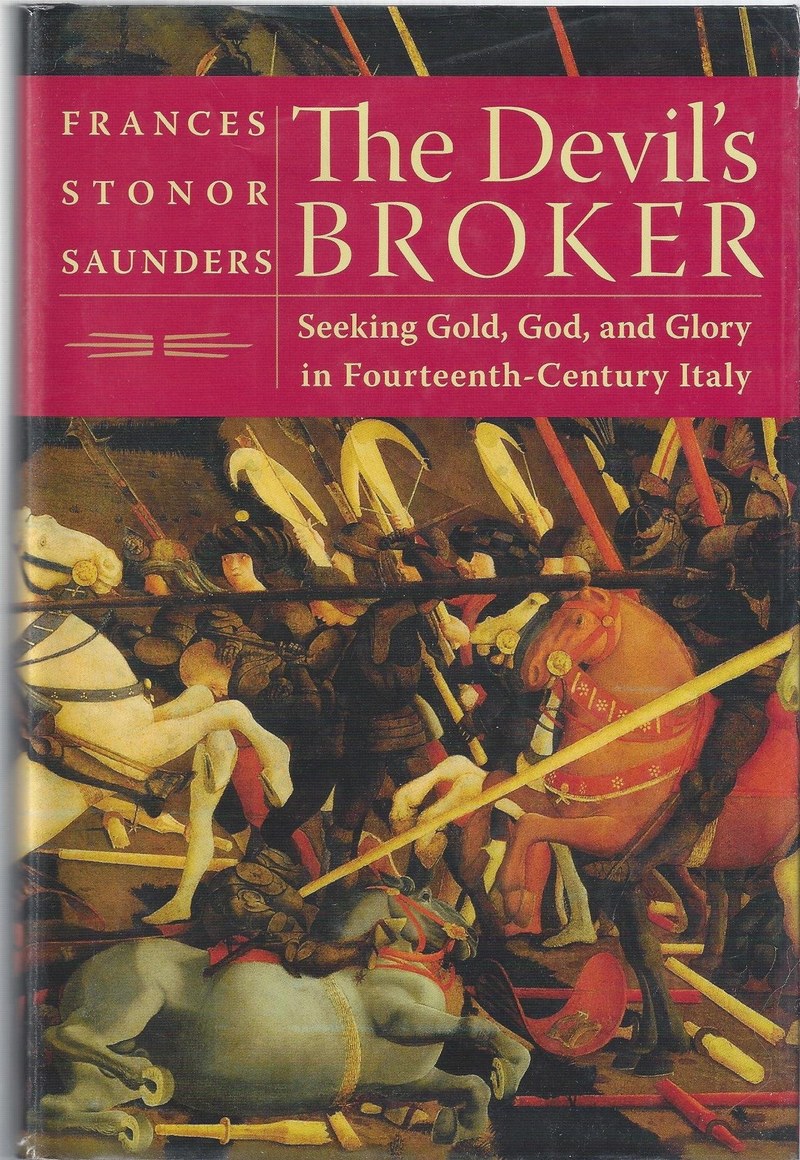
The Devil’s Broker is a fascinating popular account of the life of infamous knight and mercenary commander John Hawkwood. One of the minor English warriors who participated in the 100 Years War under Edward III, after a truce he quit formal service and joined a mercenary company. The difference between royal service and mercenary work was rather theoretical. The English chevauchee was pure economic warfare, wide-ranging looting of the countryside that paid for itself. Mercenary work was much the same.
Hawkwood’s company, the White Company, crossed into Italy, and there Hawkwood found his calling. His career was complex, to say the least, with Hawkwood fighting for Milan, Florence, and the Papacy at various points, although contrary to popular beliefs about mercenaries, Hawkwood did not suddenly switch sides on the eve of battle, or avoid battle entirely. Along with sacks and sudden assaults by storm and stealth, he was a master of the feigned retreat, luring his foes into vulnerable positions for a counter-charge. He participated in the brutal Massacre at Cesena while working for the papacy, and then switched to secular service.
Saunders makes the case for Hawkwood as an influential figure of the age. Aside from someone who executed the bloody intrigues of Italian politics, he also served as a model for the protagonist of Chaucer’s “The Knight’s Tale” (the two met several times), and advanced English foreign policy in Italy, a vital market for English wool, and a strategic theater for applying leverage against the French from a second front.
Despite his long career and evident success in battle, Hawkwood died essentially broke, leaving his wife and children to make their own way in the world rather than establishing a major line. Dying in bed at the age of 71 or 72 is more than a lot of his contemporaries could say.
A Distant Mirror, this book, Mercenaries and Their Masters and
The Artist, the Philosopher, and the Warrior would make a solid survey of the era.