
The Difference Engine
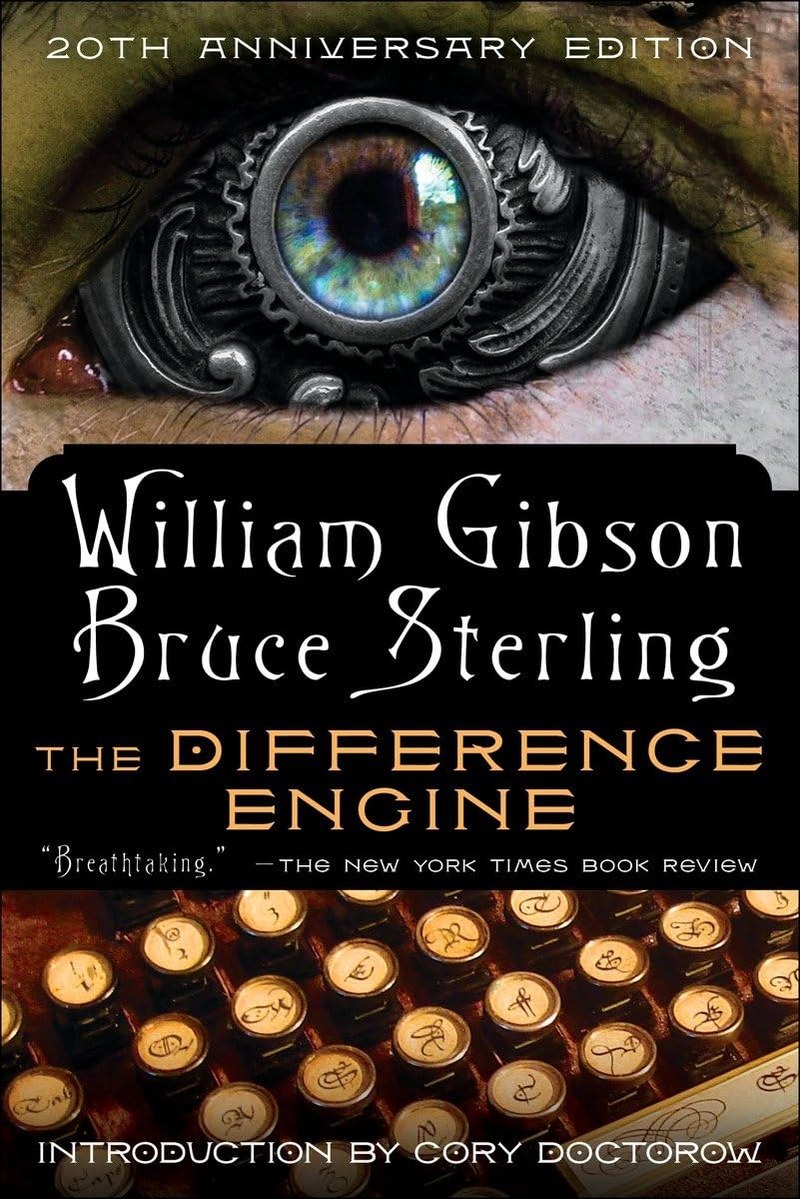
The Difference Engine is closer to being a collaborative writing exercise than anything approaching a novel. As such, the plot meanders between three points of view, with one climactic scene coming midway through the novel. The structure and pacing suffer. Fortunately, the style is of two cyberpunk masters at the peak of their abilities. Their London is a place of vivid vice, ambition, and stenches. The other major sin is that this book is in some way responsible for inspiring ‘steampunk culture’, aka ‘goths discover brown while whitewashing the sins of empire.’ I’m not sure how much fault can be laid on Gibson and Sterling for that.
*Steampunk Cosplay from VICE, *“If Steampunk Is the Future, Please Kill Me Now”
The Difference Engine is an alternative history with two linked points of departure. The first is that Charles Babbage’s primitive computing device of the same name works much better than it actually did. The second is a political transformation in England, where the Industrial Radical Party rules, having overthrown the Tory military dictatorship under General Wellington. Led by Lord Byron, now a politician rather than a poet, this new society is not some Victorian fancy of petticoats and cogs. The Rads are hard-eyed bourgeois utopians, in the model of Robespierre, St. Just, and Danton, and unlike in our reality they allied with the proletarians rather than the aristocracy when the crisis came (for a fuller explanation, see the Revolutions podcast on 1848 for what actually happened). But for all the Progress, unrest simmers in London, and it comes to a head one summer.
The first plot thread follows Sybil Gerard, daughter of a Luddite leader turned dollymop. She joins up as an apprentice adventureress with the publicist for General Sam Houston, president of Texas-in-Exile. Sybil becomes entangled with sudden violence, and a set of strange Babbage engine cards, which might have incredible power.
The cards reappear as a McGuffin in the second arc, following paleontologist Edward Miller, recently returned from Wyoming. A chance encounter with a street tough sees Miller in possession of the cards from Lady Ada Byron, the Queen of Engines, and a mortal enemy of a street lout named Swing. As the Stench, a massive public sanitation failure overtakes London, Miller finds himself facing down this Captain Swing in the midst of anarchist revolt. There’s a gunfight, Miller triumphs, and goes on to a long and successful career.
The third arc follows Oliphant, a journalist and spy, as he attempts to clean up the threads from the first two. Oliphant’s surface problems of political factions and Lady Ada’s debts may conceal something deeper, the Modus. This program is alleged to be many things, first a system for breaking games of chance, and then possibly a self-improving algorithm, a form of machine life. The book closes with a series of literary fragments, building towards a future of panopticonic surveillance in the gears.
The Difference Engine is immensely stylish, and far smarter than the steampunk fashion which apes the era without understanding its radicalism. But it’s also fundamentally about information technology circa 1991, made strange by being gears and punchcards rather than DOS PCs and BBS forums.