
The End of Eternity
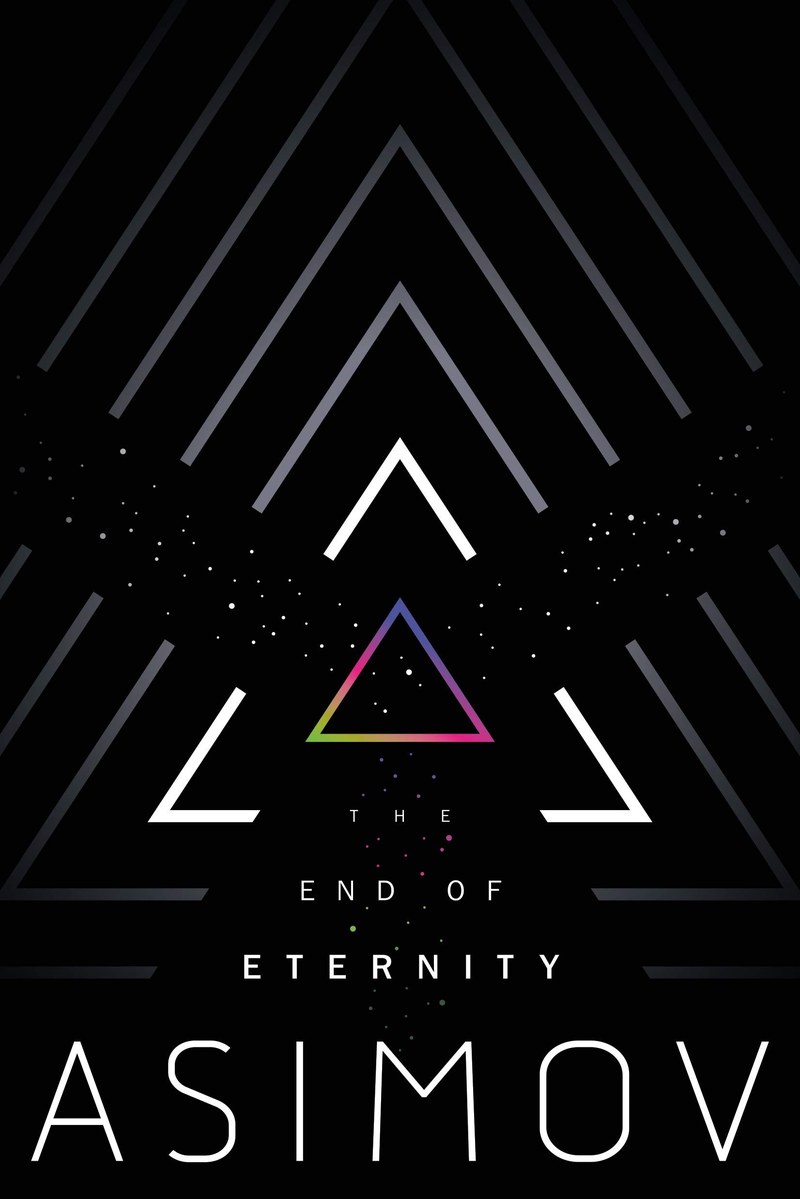
Oddly enough, despite having read a lot of vintage classic science fiction, I was entirely unaware of The End of Eternity. I guess my childhood public library had skipped this one, despite having every other significant Asimov work.
The premise is a kind of compressed timelike version of psychohistory. Time-travel is possible, within an immense range from the 27th century up to the high 70000s, and this period of human history is ruled over by the Eternals from outside time and space. These arch technocrats make minute adjustments to the timeline, aiming for the best of all possible timelines. Our protagonist, Harlan, is a Technician, the specialist who does the actual work of changing history, putting the finishing touches on the analysis of the Computers, Sociologists, and Life-Plotters.
Harlan’s cloistered professional life is upended when he meets a Timer woman, Noys, working as a secretary inside Eternity. Harlan falls into hate, then love, is seduced, and embarks on a spree of crimes to keep his love secure through alterations to the timeline. As he hides Noys away, far uptime, his bosses include him in the final part of a vital scheme to close the circular loop of time that allows Eternity to exist at all.
Riven by new doubts and emotional commitments, Harlan throws himself against his calling, for and against Noys, trying to find a satisfactory answer to the question of should Eternity exist at all. Asimov gets on his soap box to answer a resounding no: total control leads inevitably to mediocrity and cowardice. Eternity must end to let mankind flourish among the stars.
This book came out at the height of Asimov’s powers, a few years after the Foundation series was novelized and in the midst of The Caves of Steel stories. It also marks a shift away from science fiction, as he started writing a lot more popular science and mystery. His lack of interest comes through, there’s something perfunctory about this book. The story hinges on Harlan’s emotional state and the “romance” with Noys, two of Asimov’s weak points. It’s a solid book by a professional who knows what he’s doing, but in the 21st century a reasonable deep cut to pass over.