
The Invisible Life of Addie LaRue
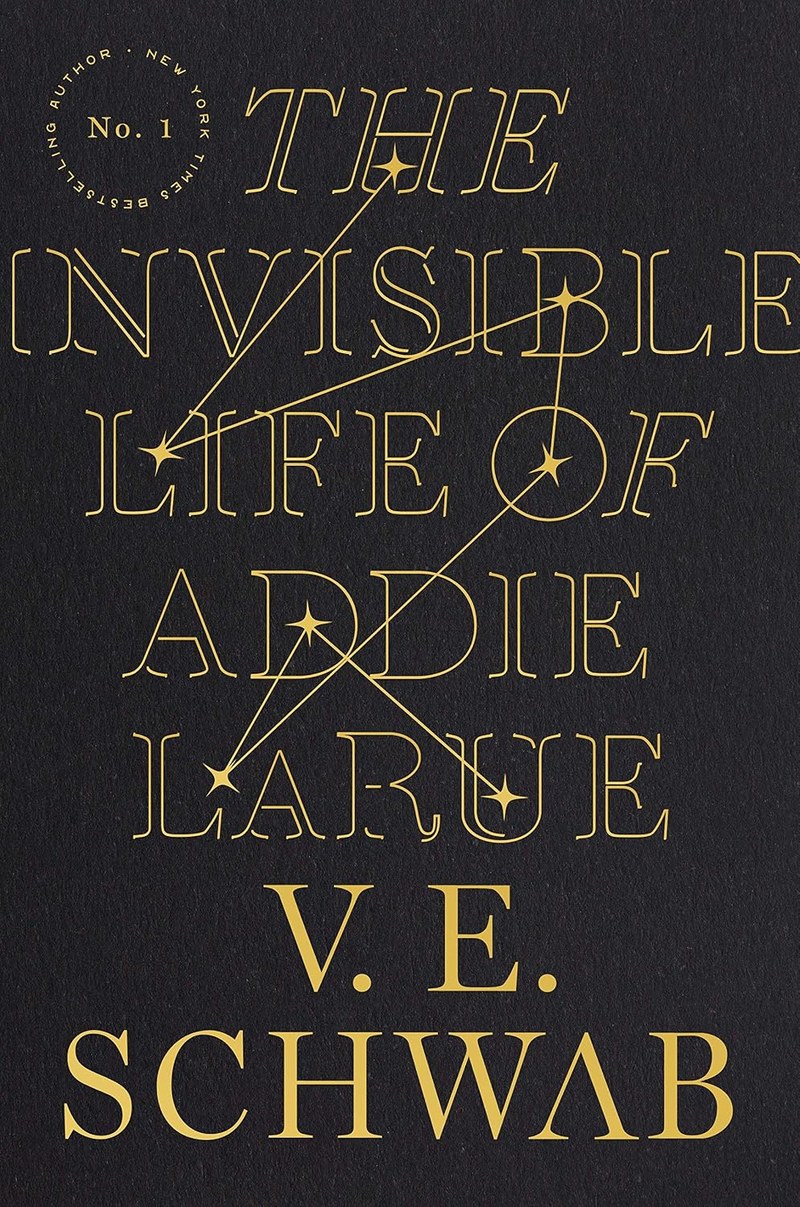
Addie LaRue is a spirited young woman in early 18th century France, where the respectable life paths are “wife and mother” or “nun”. Forced into an unwanted marriage, she calls out to the dark, and the dark answers in the form of the green-eyed, black-haired man of her dreams. He deals in souls and bargains, and Addie trades her soul for freedom. The dark (call him Luc; his other titles are so formal) is happy to oblige, but the fine print on this contract is a killer.
The consequence of Addie’s absolute freedom is the inability to leave any kind of mark on the world. People forget her as soon as she leaves their sight. She can’t write or draw, break an object, light a fire, or even stab a man permanently. While she can’t die, she can still suffer from cold, hunger, the pain of violence, and psychological torment.
She returns from her bargain in her wedding dress to find that she is forgotten. Her own parents drive her off as a stranger, and there is little kindness or practical freedom for impoverished young women in this world. No one can live as a shadow, and Luc figures that within a year Addie will be broken and begging for death. While Addie may not have read the fine print, Luc misjudged his victim, and Addie decides to live, first out of spite and then out of wonder at the world.
The story follows Addie along two parallel tracks. One, stretching from Villon, France, sees her finding the limits of her curse and a way to live. Being forgotten is a handy ability for a thief, and a beautiful young woman can find people who are not alarmed at waking up next to a stranger. Addie becomes a muse to artists through the centuries, going through a Groundhog Day cycle of one-night stands until she can’t take that one reaction anymore and moves on to the next person.
The second and more interesting track is Addie in 2014 New York, her present. There’s never a bad time to be young in New York, though in my opinion 2004 would have been much hipper. She’s going about her routine when something snaps. Henry, a clerk at a bookshop, remembers her, and this artistically tormented young man is the first authentic human contact Addie has had in centuries. What follows is worth keeping unspoiled, but the exploration of how Addie and Henry fit together is immensely satisfying on every level.
Schwab has done good work teasing out the implications of her premise. For example, using a computer counts as writing, so Addie is locked out of electronic systems entirely. At over 400 pages, the story sags in as Addie marches through history, with the same lessons framed in slightly different ways, and Addie is reintroduced to Henry’s friends repeated. “Show don’t tell” is common writing advice, but in this case I got what was being shown on the first go-around and didn’t need the third or forth repeat of the chorus. There is a fantastic 200-page novella inside this book.
Fortunately, Schwab is a gifted writer and a pleasure just hanging out with her characters. The Invisible Life of Addie LaRue is a little outside of my usual tastes in fantasy, which tend to feature more swordfights than first dates, but I really enjoyed the book.