
The Junior Officers' Reading Club: Killing Time And Fighting Wars
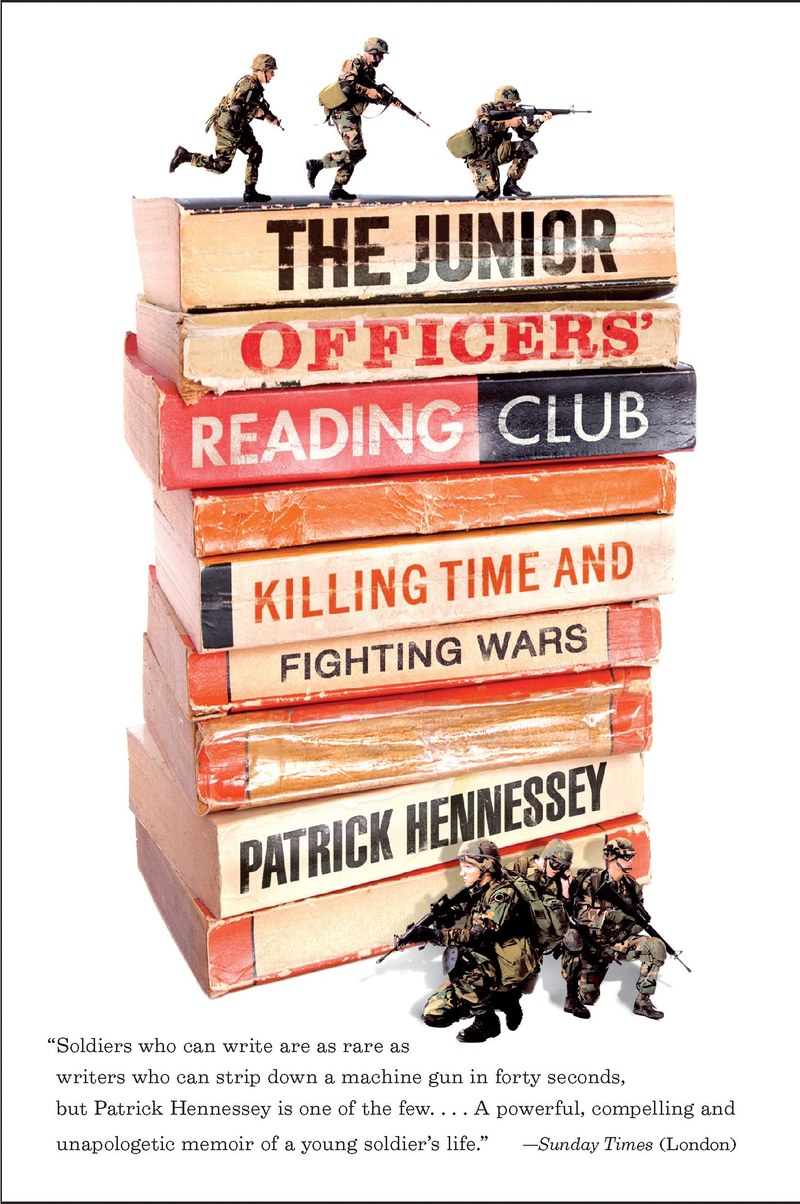
The Junior Officer’s Reading Club is a center-of-the-road War on Terror memoir, notable mostly for the fact that Hennessey was in the British Army, and its literary pretensions. War was a chance for Hennessey to test himself against the ultimate test of combat. Given that he wasn’t marinating in post-9/11 propaganda and seems a decent bloke, the chance of adventure is the best explanation for why this all happened.
His story moves through Sandhurst, and then the Grenadier Guards: standing around in bearskin hats in London, peacekeeping in Kosovo, counter-insurgency in Basra, and finally all out combat in Helmand Province, Afghanistan. Hennessey writes in the easy banter of the lads, one soldier talking to another. A lot of what comes through is posturing. Sandhurst is all about appearing military tough in the classical ‘stiff upper lip’ tradition of the British Army. But the real deal is looking cool on operations, rolling out with the right soundtrack, getting the right clips to stitch together for the mates back home. And finally, playing the heroic man of action, braver and more masculine than any number of London bankers.
War itself, well, war is mostly boring, mostly waiting around in bad weather, or waiting around in decrepit buildings. And then there are flashes of action that make it all worthwhile, reconnaissance in force and storming compounds and calling in air strikes. Danger is all around: Hennessey’s company suffered about 1/3rd casualties during its tour in Afghanistan. Their Afghan National Army partners took it worse, with less equipment, less training, and an “inshallah” attitude towards military discipline.
One thing that comes through is that while the Taliban might have been the adversary, the RAF is the enemy. Britain has a bad case of imperial hangover, maintaining a global-spanning interventionist battleforce on a national budget that really can’t afford it. At one point Hennessey notes that the US keeps more troops in Korea “just in case” than are in the British Army, period. And while the British Army has been continuously engaged in various post-colonial emergencies, Northern Ireland, and then the Balkans and the War on Terror, money goes towards ships and fighter planes.
Hennessey’s open model for his book is Herr’s immortal Vietnam War story Dispatches. That’s a very high star to aim for, and the writing doesn’t quite hit (he is perforce tied closer to his own story than Herr was), and this has the ironic post-modern weirdness of the 21st century; watching 24 while serving as wardens for an Iraqi prison, debating The OC on patrol, but in a few moments, it soars close.