
The Man in the High Castle
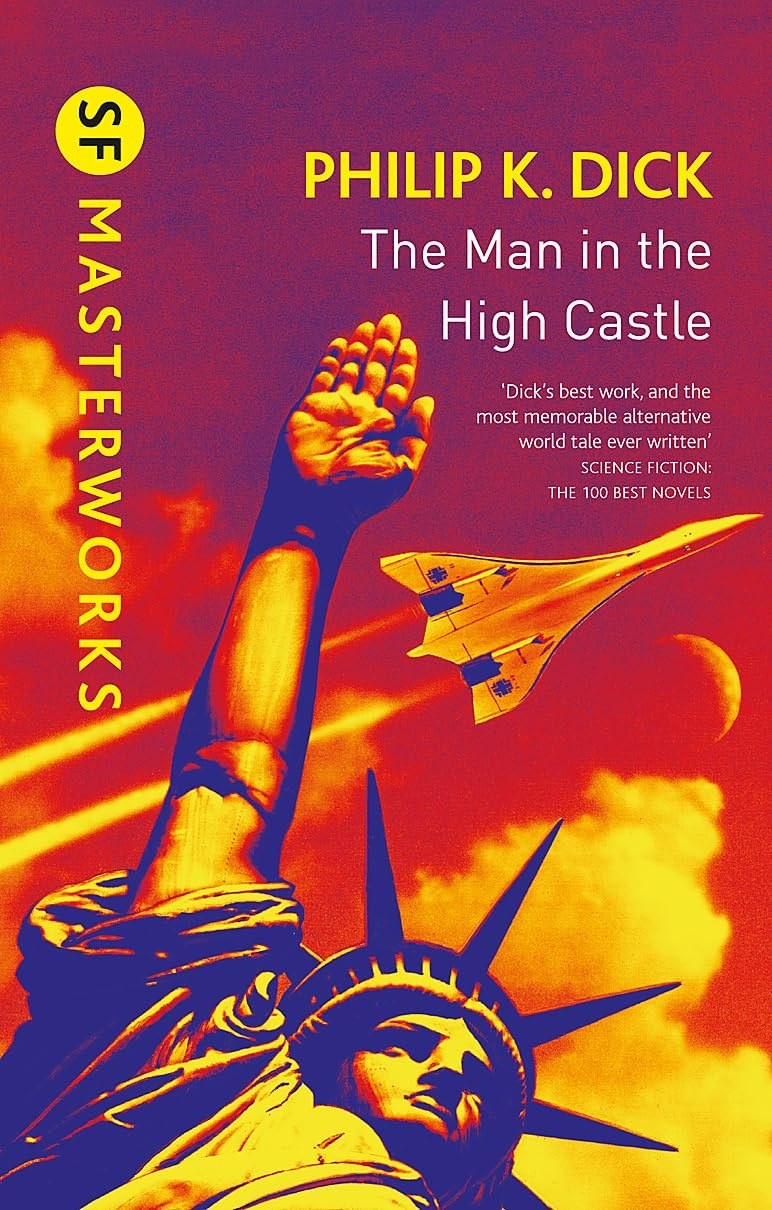
I really don’t know how or what to say about The Man in the High Castle, except that it is truly a wonderful, richly imagined book.
The year is 1962, and the Axis won World War II. The United States is divided between Nazi puppet states on the East Coast, and Japanese occupied territory on the West Coast, with a slim buffer in between in the Rocky Mountains. The main characters go about their lives under fascism, several of them guided by the I Ching, and linked together in strange and obscure ways.
The little drip of details, the divergence between our world and Dick’s, is simply incredible. Yes, of course the British committed terrible atrocities as they were dragged down by the Reich (see Operation Vegetarian for what Churchill might have ordered if the war had gone differently). Sure, Nazis are colonizing Mars after draining the Mediterranean Sea and exterminating Africa. The depictions of what Hannah Arendt called “the banality of evil”, and the idealistic cynicism and internecine nihilism of the resurgent Third Reich, feel terrifyingly authentic.
The novel plays with metatextuality, as one of the key threads is the fictional novel The Grasshopper Lies Heavy, an alternative history within the alternative history where the Allies won the war. One of my favorite bits is a meditation on historicity by a purveyor of fake Americana (the Japanese are obsessed with American artifacts). One lighter was in FDR’s pocket when he was assassinated; the other is a worthless reproduction. Is there any difference between the two? Is there an aura of history that surrounds the authentic artifact? How do we know the difference between the truth and a pack of lies?
Philip K Dick is the premier paranoid author of science fiction. Everything is connected, everything you know is a lie. He was incredibly prolific (121 short stories, 44 novels), but I think this is his best work. He gives the story enough time to breathe, and the voice of the I Ching adds some necessary philosophical weight.