
The Most Awful Responsibility: Truman and the Secret Struggle for Control of the Atomic Age
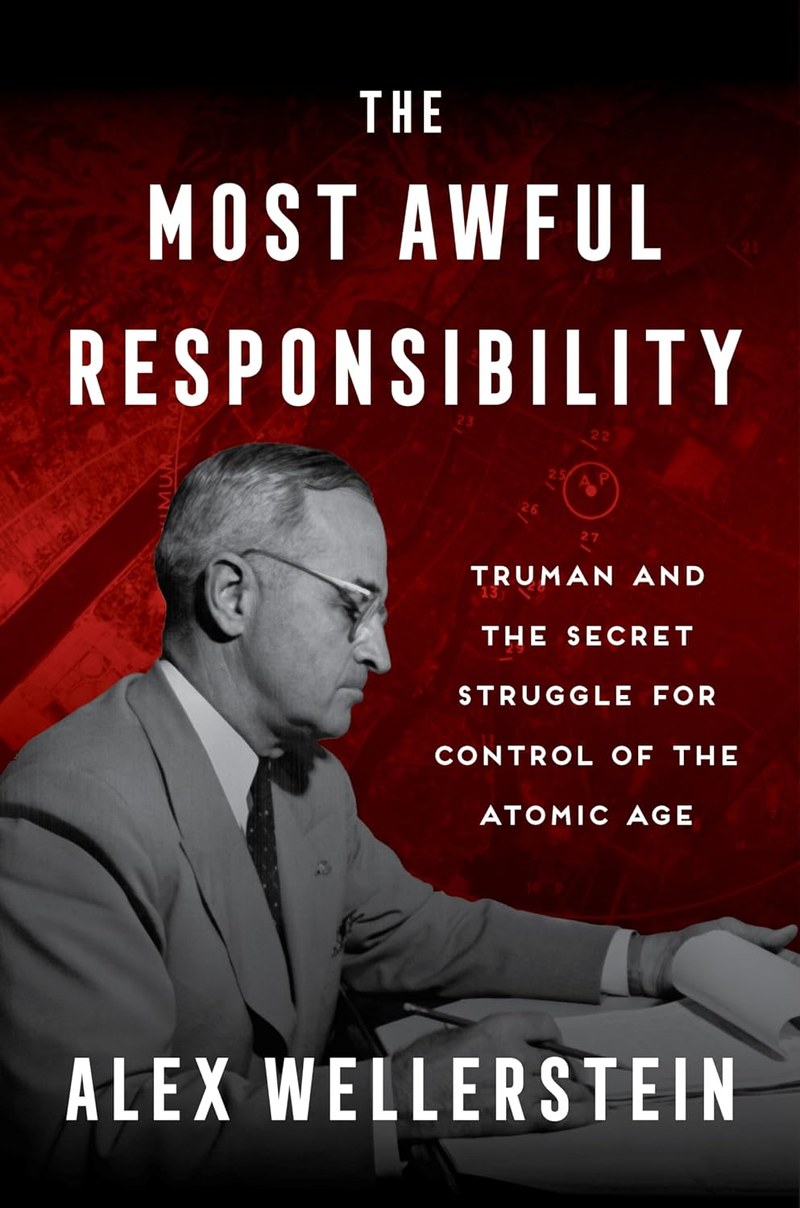
Wellerstein is one of the foremost nuclear historians working today. Along with his scholarly work, he’s been running NUKEMAP since 2012 (see what 10 megatonnes would do to your neighborhood!) and the Doomsday Machines newsletter. The Most Awful Responsibility directly examines the origins of the nuclear age through the lens of President Harry Truman, the only leader to ever use nuclear weapons in combat. The book is structured into three main sections: the decision to use nuclear weapons on Japan during WW2, the formation of the Atomic Energy Commission immediately after and debates over who would control the bomb, and finally the possible use of nuclear weapons in the Korean War.
There are two major arguments around the bombings of Hiroshima and Nagasaki. The conventional argument is that the bomb was used to save lives. The planned invasion of Japan was predicted to be a bloody fiasco, a frontal assault against a fanatical opponent who’d use kamikazes and massacre their own civilians rather than surrender, as had happened on Okinawa. Anything that shortened the war saved both American lives and Japanese lives. The revisionist argument is that the primary motivation to use the bomb was to gain a diplomatic edge over the USSR in the postwar era: We can annihilate Moscow, you cannot defend it.
Contrary to both of these arguments, Wellerstein draws on what Truman knew and said in high-level meetings to argue there was no single decision to use the bomb. Truman had not been briefed on the Manhattan Project before he succeeded Roosevelt. Roosevelt’s plans were a secret, or more likely an improvisation, that died with him. While Truman was immediately read into the project by Secretary of War Stimson, General Groves of the Manhattan Project, and scientific advisor Vannevar Bush, he had many demands on his time and lacked the foreign policy experience to put the bomb in perspective.
The plan to use the bomb was made at a lower level by a committee chaired by Stimson. The options debated did include a “demonstration bombing” of a mostly uninhabited area, but the only real decision was that Kyoto would be spared, likely due to Stimson’s fondness for the city and its cultural importance. The Trinity test occurred just before the Potsdam Conference started, where the countries of a conquered Europe were divvied up, and the Potsdam Declaration reiterated an unconditional surrender for Japan.
The only decision that Truman made in the immediate run up to the atomic bombings was agreeing with Stimson’s proposal to spare Kyoto. Wellerstein argues that he was under the impression that Hiroshima was a naval base, and that he learned America had destroyed a city from the newspaper headlines like everyone else. Truman was also under the impression that he had weeks to decide on the next target, based on the production cycle of Fat Man plutonium bombs. He was likely unaware that two bombs were ready to go at the beginning of August, and the bombing of Nagasaki was again implemented at lower levels, by Air Forces Pacific Commander General Spaatz and XXI Bomber Command leader General LeMay.
This is striking sloppiness, but to Truman’s credit, he recognized the moral horror of what he’d done and moved to stop the bombings and centralize authority for their use under the President. Wellerstein persuasively argues that the use of the bombs was a chain reaction that began with the Einstein–Szilard letter to Roosevelt, and the momentum of the Manhattan Project led to their use. The surrender of Japan is over-determined: was it the Soviet declaration of war? The blockade and firebombing campaign? The threatened ground invasion of the home islands? The atomic bombs? All of these together and none of them individually. The bombings of Hiroshima and Nagasaki were a tragedy, and while Truman was responsible (the buck stops here, as a plaque on his desk read), he hardly deliberately embarked on mass murder.
A few interesting notes from this first section. The “conventional argument”, that the bombs were used to save lives, was a 1947 retrospective creation by Stimson to justify government policy against rising opposition. And casualty estimates for the invasion of Japan were likely lower than the 1 million estimate in popular knowledge. Truman’s memos on plans for invasion are annotated with substantially lower numbers in his own hand. I don’t think anyone was under the impression invading Japan would be easy, but it would likely be less deadly than the rest of the American side of WW2 combined.
The second and third sections of the book are perforce less dramatic. Setting up the Atomic Energy Commission (AEC) is a bureaucratic struggle to regularize the bomb. While there were some calls to put atomic weapons under international control, these did not succeed. In the immediate postwar era, America’s atomic weapons program was purely nominal. The first generation of atomic weapons were scientific instruments that exploded, not robust weapons systems, and the expertise that had assembled them scattered with demobilization. In 1946 and 1947, the number of immediately deployable weapons the US had was zero, and the total number available on a month’s notice was perhaps a dozen. The exact number was so terrifying that AEC commissioner Lilienthal refused to commit it to writing, leaving a blank on a memo and telling Truman how many bombs he had personally.
The AEC did eventually succeed in regularizing the production of bombs, but the plutonium cores were under civilian control and could only be transferred to the military with Presidential approval. The Air Force record of crashes with non-nuclear Mk. 4 bombs (no atomic fuel, but several thousand pounds of high explosive lens) is ample demonstration this was the right call.
The Korean War offered the first major test of Truman’s nuclear policy. A combination of military demands for more firepower and a reasonable search of the alternatives led Truman to commission several studies on “tactical” atomic weapons, which concluded that they would have a negligible military effect and alienate allies. A bad news conference gaffe on Truman’s part, as well as General MacArthur’s bluster and frustration with fighting a limited war created the impression that America was much closer to using nuclear weapons than it ever actually was. The furthest preparations went was the dispersal of nine cores to Guam, with explicit orders that these weapons could not be used by MacArthur, and could only be deployed with specific Presidential authorization.
Wellerstein concludes that Truman’s personal character played a large part in setting up the modern nuclear taboo. Having used bombs twice, he understood them as weapons of a different character, suitable only for atrocities. His stance structured the bureaucratic options of the 1940s and 1950s, which were much less bellicose than contemporary attitudes from General Eisenhower and Democratic Senator Brien McMahon. Wellerstein is partial to Truman, but also aware of his weaknesses, particularly on assuming the Presidency, and that in a better world this moral stance might have been proactive rather than reactive.