
The Sentence
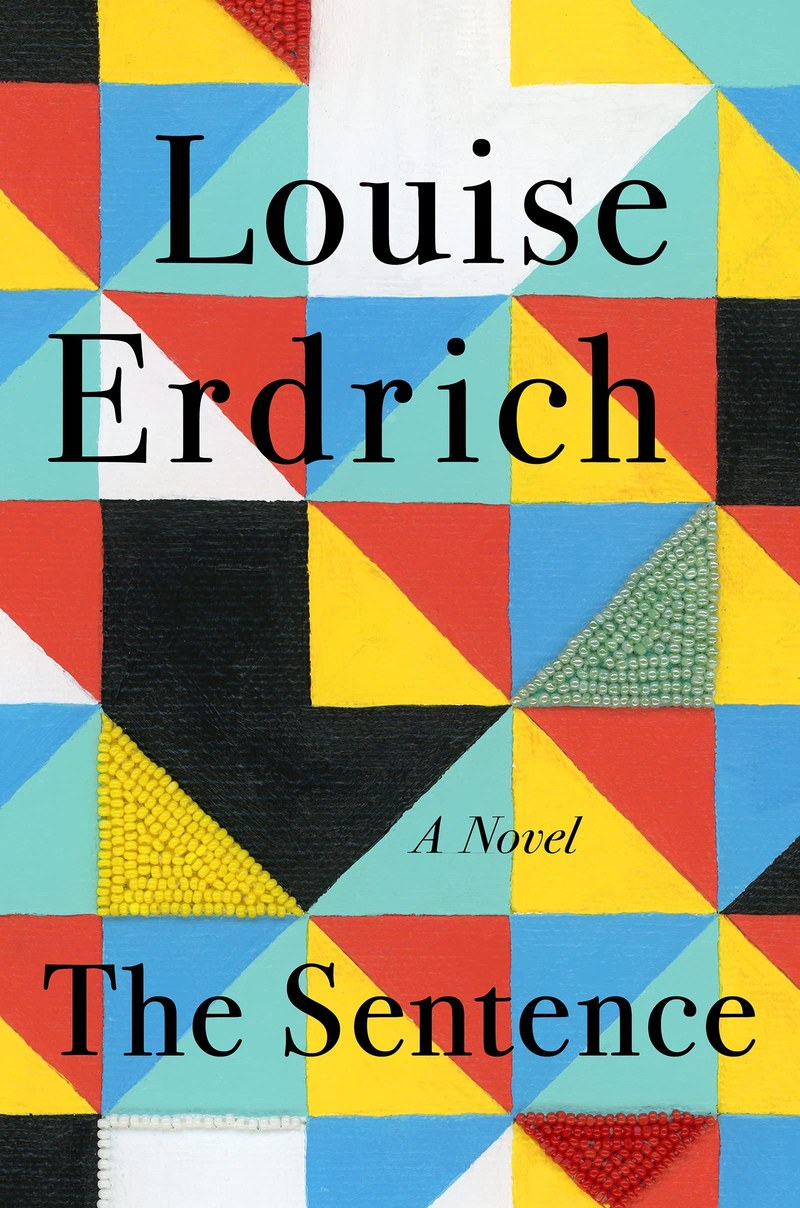
The Sentence is a book about a lot of things, mostly about somehow getting through 2020 without dying. You remember 2020, right? There was that COVID-19 pandemic, the Black Lives Matter protests, an election.
Tookie, our narrator, is an Indian woman with a checkered past who works at a Minneapolis bookstore a lot like the real Birchbark Books owned and operated by Erdich. The checkered past is a criminal record, capped off by stealing a corpse and drug trafficking (it’s complex). But that was all in the past, and these days she’s married to the cop who arrested her (also complex), works at a bookstore, and mostly holds the pieces of her life together.
Things begin to come apart when Flora, her most annoying customer, dies suddenly, and begins haunting the store. Flora is a “wannabe”, a White lady who really wanted to be an Indian, and while annoying, was good-natured and helpful enough that no one in the Minneapolis Indian community told her to pound sand. Unsettling sensations and fallen books are bad enough, but Tookie is given the book Flora was reading when she died, a journal of captivity by an Indian woman, and finds that there might be vicious supernatual powers at play.
Not that she has much time to deal with this, because her daughter* Hetta arrives for the holidays with a surprise baby (precisely, Hetta is her husband Pallas’ niece who Pallas raised. Tookie and Hetta didn’t get along). The baby draws everyone together, and then COVID happens, George Floyd is murdered, there are protests and riots and the whole grim year most of us would like to forget, and literature seems to have forgotten.
The strongest part of the book is Tookie herself. She’s smart, tough, passionate, compromised, broken, a character with a rich interior who’s a delight to spend time with. Unfortunately, secondary characters are a weakness. Some come through quite well, particularly Tookie’s husband Pallas and her favorite customer, an elderly Black man nicknamed Dissatisfaction who’s a voracious and picky fiction reader. On the other hand, I think Tookie has four coworkers, and only one of them stuck in my memory: Asema, an ideological young Native scholar with a penchant for dramatic romances and plans for major tattoos. The other three just kind of blur together, and I know Erdich is a better writer than that.
This book is about being haunted. Literally, in terms of the ghost. But also by our individual pasts, and the collective past that the United States of America is built on 1) stolen land, 2) genocide, 3) slavery. And for the survivors of that, who are still very much around, it’s an every day wound. For the victors, a hollowness under our feet. It’s also about the power of literature to move, to heal, and to enchant the world. I’m not sure how much I loved it, but I feel stronger having read it.
And as a note, one thing I started tracking was a reversal Bechdel test, and I’m not sure any male characters share dialog! The closest is a few pages from the point of view of Pallas talking to his newborn grandson, and a story that the baby’s father tells a group that includes Pallas. Not sure if this was deliberate, but it’s cool to note.