
The Three Pillars of Zen: Teaching, Practice, and Enlightenment
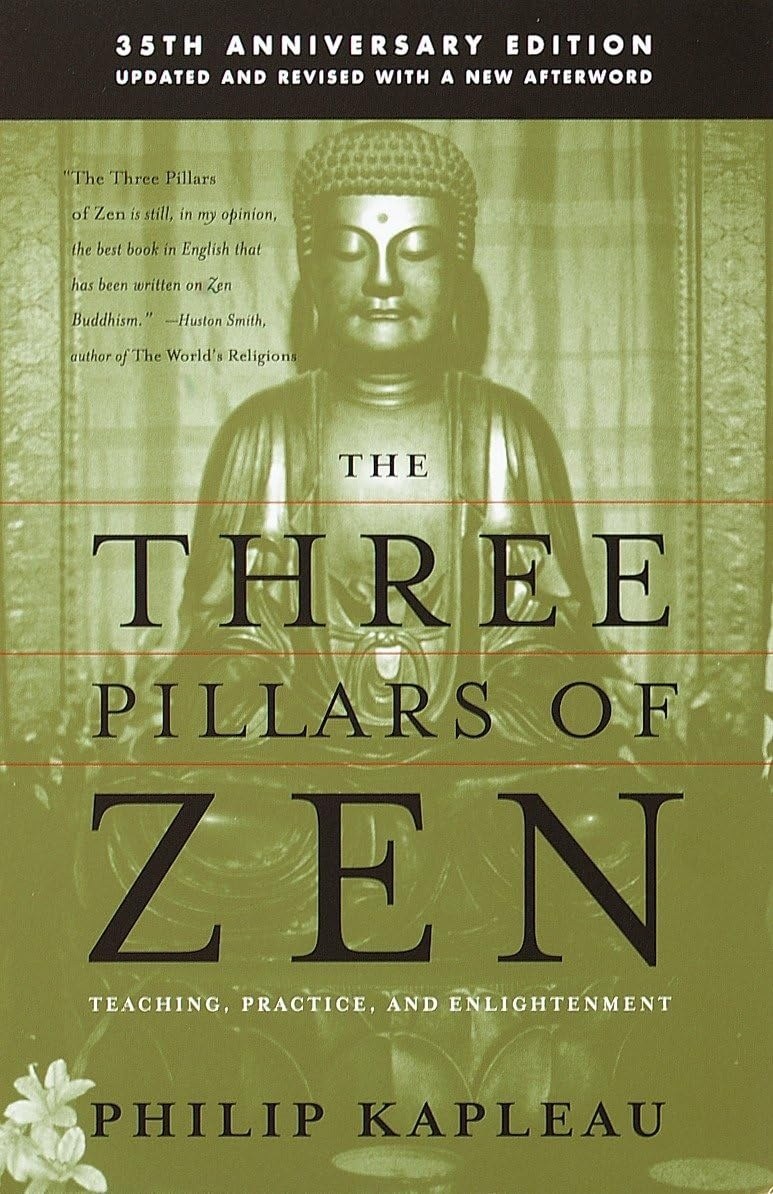
Three Pillars of Zen is rightfully a classic in its field. Philip Kapleau ably provides an insider’s view of Zen, focusing on the experience of zazen, the proper term for Zen style meditation, as done during sesshin, the week-long spiritual intensive that providently culminates in kensho, enlightenment.
The object of Zen is to discard the delusions of the discriminatory mind: sensation, thought, self, so words are of little use, like mistaking a finger pointing at the moon for the moon. But there is a state of still tension, taut like a bowstring, that enables a person to break through to a higher level of understanding. This takes effort, devotion, and faith, but it is eminently possible. The best parts of the book concern eight personal accounts of reaching enlightenment from a mix of contemporary Japanese and Western seekers, more or less ordinary people who did a few years of meditation, a few sesshins, and focused on the koan Mu until they found what they were seeking. A second standout is the records of dokusan, the one-on-one encounters between a teacher and student that are the heart of the mind-to-mind transmission of Zen, and which by long tradition (though apparently no hard rule) are not written down.
There are some things I did not much care for. Kapleau includes a large amount of commentary which I found boring and irrelevant next to the first-hand experiences. The goal of this book was to transmit Zen to the West, since it was fading in Japan. This missionary impulse carries with it a great sense of superiority, over academic theologians, tantric yoga, and slightly different schools of zen. And somewhat surprising to me, sesshin is more active and aggressive than I expected. Poor sitting is corrected with thwacks of a baton, violent strikes intended to goad the student through to their goal, but which seem at odds with a religion of peace.